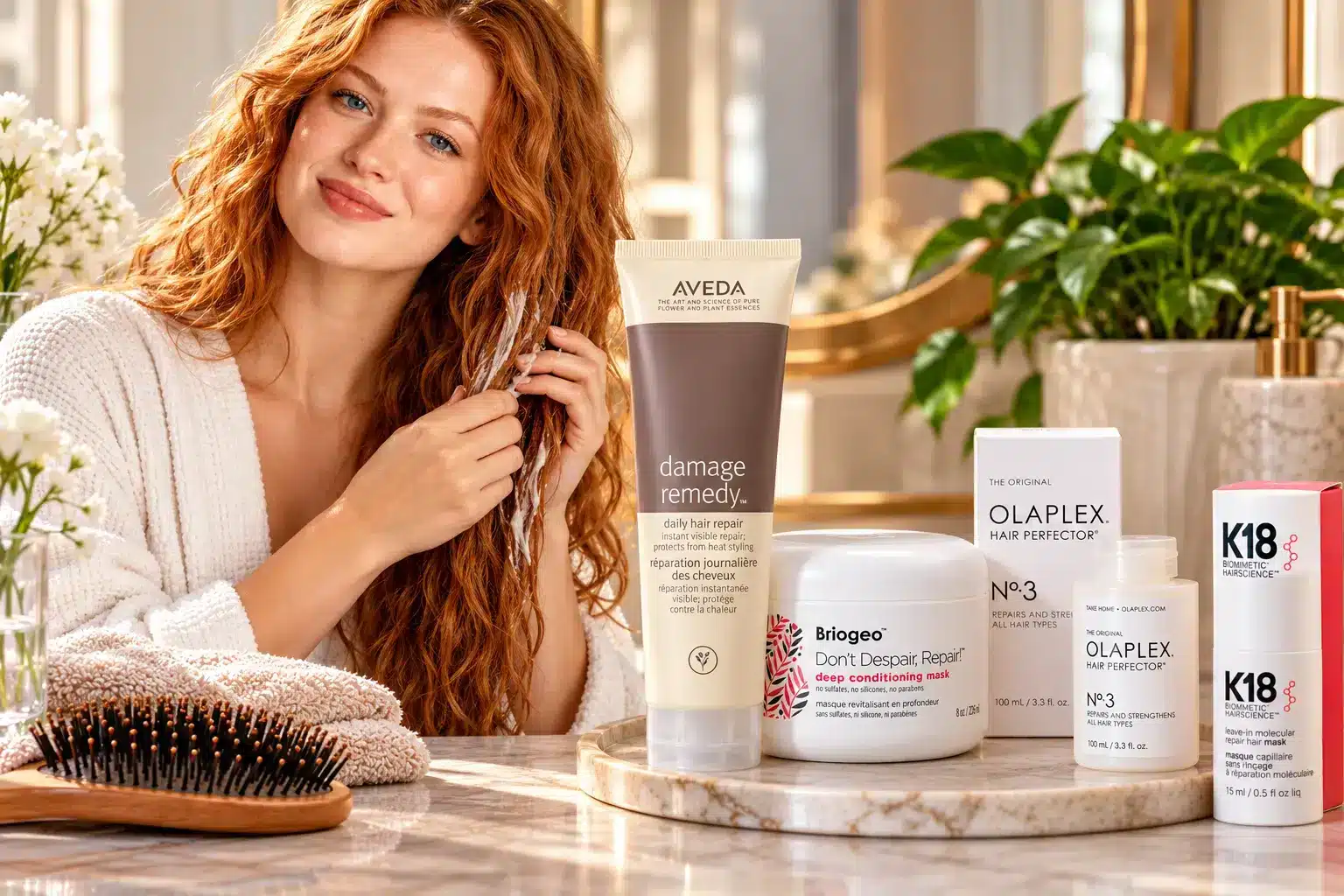
The first change in a damaged-hair routine is usually the thing you stop doing. A mask has little chance of making your lengths easier to manage if every wash ends with rough towel rubbing, a brush dragged through knots, and several hot passes over the same fragile ends. Before adding another treatment, make the next wash gentler. Reduce avoidable heat, give your hair enough conditioning to detangle comfortably, and stop treating a polished finish as proof that the damage has disappeared.
If you are wondering how to repair damaged hair, begin by separating three needs: preventing more breakage, improving the feel of the lengths you already have, and removing ends that are too compromised to keep. Those needs overlap, but they do not demand the same product. A rinse-out conditioner supports slip. A targeted treatment may help strengthen damaged strands. A heat protectant belongs before appropriate heat styling. A trim addresses split, ragged tips that conditioning can temporarily disguise. Buying one of each is not automatically the right starting point.
Your hair also deserves a more specific description than “damaged.” Fine, highlighted hair that catches near the ends needs a different amount of conditioning from thick, dry hair that tangles across the whole length. Curls may need careful wet detangling and enough slip to preserve their pattern. Straight hair often benefits from less handling while wet. Recent bleaching, repeated straightening, tight hairstyles, and frequent brushing can each change what you should address first. Think about the moment your hair struggles rather than judging it only in the mirror.
I would make the initial routine small enough to repeat on an ordinary weekday: a shampoo that suits your scalp, an appropriate conditioning step, and one purposeful leave-in if needed. Keep a specialized repair treatment separate until you understand its instructions. Some treatments go before shampoo, while others require freshly shampooed hair and a pause before any additional product. Applying everything together can make the routine harder to follow without making it more useful.
The ten products below illustrate those different jobs. They are alternatives and possible additions, not a ten-step regimen. You might need only a better conditioner and a more careful drying method. You might prefer a targeted treatment alongside the products you already tolerate. Either way, the aim is manageable hair with fewer opportunities for friction and breakage, not a bathroom full of repair labels.
Keep expectations practical. Softer hair, easier detangling, and smoother styling can be worthwhile improvements, but they do not mean your lengths have become untouched hair again. Persistent shedding, a widening part, scalp pain, or patchy loss needs a different conversation from dry ends. Treat that distinction seriously while giving your everyday hair care a calmer, more consistent foundation.
My starting recommendation is to change the highest-stress habit before upgrading the most expensive bottle. If you straighten your ends repeatedly to make them look healthy, reduce those passes first. If washing leaves a tangled mass, improve conditioning and sectioning. A treatment earns its place when it makes a specific part of your routine easier; it should not be an excuse to continue the behavior that caused the problem.
Three Useful Starting Points for a Hair Reset

K18 Leave-In Molecular Repair Hair Mask — 0.5 fl oz
- Leave-in peptide treatment
- Apply after shampoo, before conditioner
- Four-minute pause before further products

Oribe Gold Lust Repair & Restore Conditioner — 1.7 oz
- Rich rinse-out conditioner
- 1.7 oz travel-size format
- Apply after shampoo

Alterna CAVIAR Restructuring Bond Repair Leave-In Heat Protection Spray — 4.2 fl oz
- Spray before blow-drying
- For clean, towel-dried hair
- Leave-in heat-protection role
Make your next purchase answer one question: what is missing from the wash you already do? K18 is a specialized post-shampoo treatment, OLAPLEX N°.3 belongs before shampoo, and Oribe Gold Lust is a rinse-out conditioner. They are not three versions of the same step. The smaller choices matter too: a concentrated cream can suit dry ends while a spray is easier to distribute through sections before drying.
Before comparing products, look at the instructions on what you own. You may already have a suitable conditioner, a thermal protectant, and a treatment with a clear schedule. In that case, better placement and gentler handling are the next improvements. Replace a poorly fitting step rather than adding a second product that performs the same job.
Damaged-Hair Care at a Glance
K18 Leave-In Molecular Repair Hair Mask — 0.5 fl oz
- Leave-in peptide treatment
- Apply after shampoo, before conditioner
- Four-minute pause before further products
- Small 0.5 fl oz format

OLAPLEX N°.3 Hair Repair Pre-Shampoo Treatment — 100 ml
- 100 ml pre-shampoo format
- Separate from everyday conditioning
- Rinse before shampoo and conditioner
- Follow the exact bottle’s contact time

Briogeo Don’t Despair, Repair! Deep Conditioning Mask — 8 oz
- Rinse-out deep conditioning format
- Protein-and-moisture approach
- 8 oz jar for planned mask washes
- Apply and rinse using jar directions

Aveda Damage Remedy Daily Hair Repair — 3.4 fl oz
- Leave-in cream for damp hair
- Detangling and conditioning support
- Includes heat-protection function
- Quinoa, macadamia and soy treatment approach
Oribe Gold Lust Repair & Restore Conditioner — 1.7 oz
- Rich rinse-out conditioner
- 1.7 oz travel-size format
- Apply after shampoo
- Fragranced Oribe hair-care experience

Moroccanoil Intense Hydrating Mask — 16.9 fl oz
- Intensive rinse-out conditioning
- For medium to thick dry hair
- Five-to-seven-minute contact time
- No added heat required

Pureology Strength Cure Dream Healer Serum
- Leave-in for damaged lengths
- Smoothing and shine-oriented finish
- Heat-protection function
- Apply using bottle-specific directions
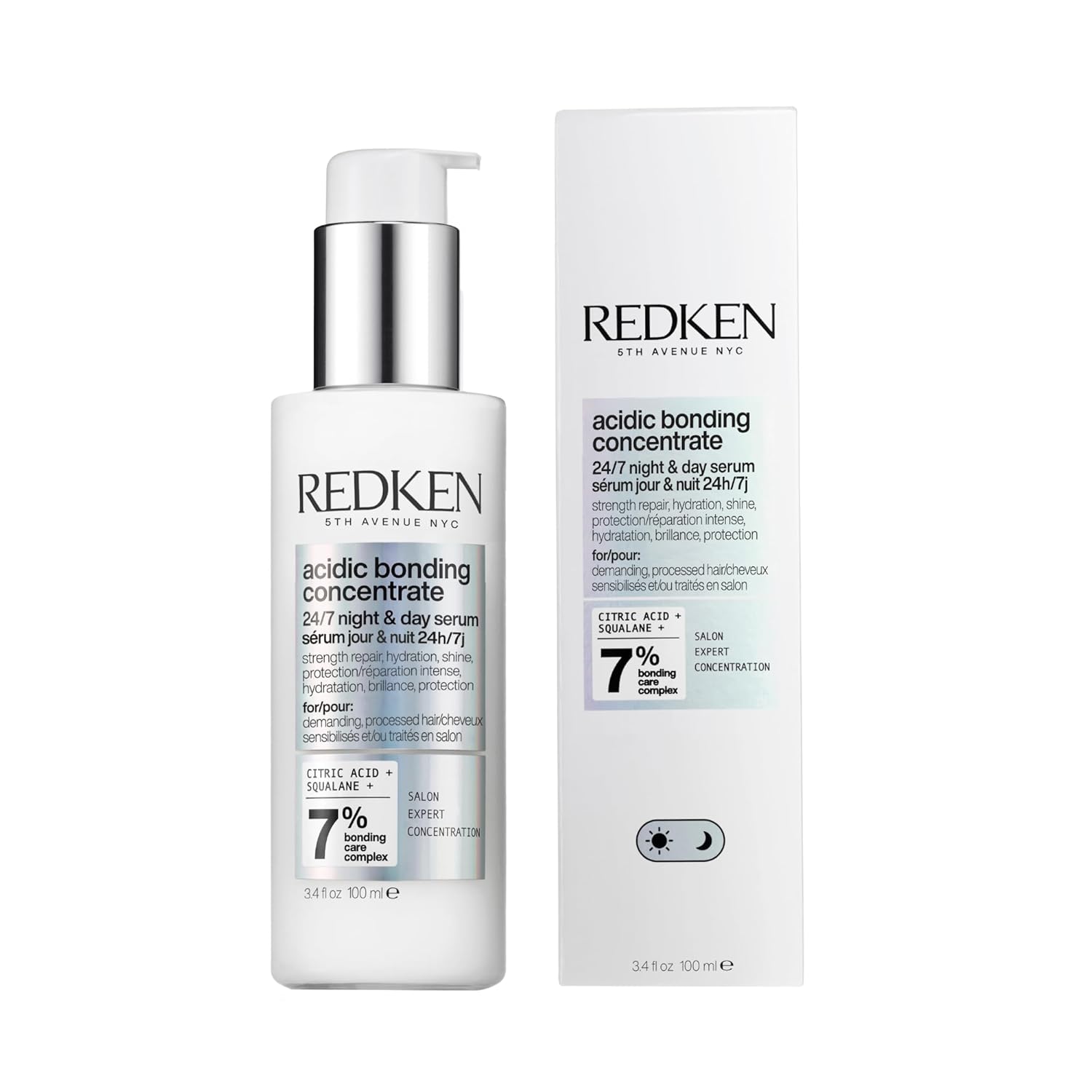
Redken Acidic Bonding Concentrate 24/7 Night & Day Serum
- Leave in; no post-application rinse
- For clean damp or dry hair
- Citric acid and polyglutamic acid
- Lavender-fragranced night/day format
Alterna CAVIAR Restructuring Bond Repair Leave-In Heat Protection Spray — 4.2 fl oz
- Spray before blow-drying
- For clean, towel-dried hair
- Leave-in heat-protection role
- 4.2 fl oz spray format

Philip Kingsley Elasticizer — 5.07 fl oz
- Classic Elasticizer formula
- Apply to damp hair before shampoo
- Rinse, then shampoo and condition
- 5.07 fl oz tub format
Quick Choices by Reset Priority
How I Match a Damaged-Hair Reset to Your Routine
I match a reset to the point at which the hair becomes difficult to handle. These six starting routes connect common problems with useful product formats. Move slowly enough to notice what changes, and keep the amount and placement appropriate for your density. A rich treatment on the ends does not require the same application at the roots.
Bleached, fragile lengths
Consider K18 as a targeted post-shampoo treatment or OLAPLEX N°.3 as a pre-shampoo option. Choose one method to learn first. Keep extra processing and repeated hot-tool passes out of the reset.
Dry, thick hair
Moroccanoil Intense Hydrating Mask offers a richer conditioning route. Concentrate on the lengths, rinse thoroughly, and judge softness alongside movement rather than measuring success by how much product you used.
Fine hair, tangled ends
Try a suitable rinse-out conditioner such as Oribe Gold Lust before assuming you need a heavy mask. Keep application away from easily flattened roots and work through small sections without forcing a comb.
Heat styling remains necessary
Aveda Daily Hair Repair or Alterna Heat Protection Spray can fill a protective leave-in slot. Distribute the chosen product as directed, use restrained heat, and avoid repeatedly restyling yesterday’s fragile tips.
Between-wash roughness
Redken ABC 24/7 Serum can be used on clean damp or dry lengths. Start conservatively on the areas that need it. Do not turn a small finishing adjustment into layers of several different serums.
A slower wash-day ritual
Philip Kingsley Elasticizer belongs before shampoo. It makes sense when you can allow a conditioning pause, then rinse, cleanse, and condition. Keep the treatment appointment realistic for your schedule.
Detailed Reviews: Treatments, Conditioning and Protection
1. K18 Leave-In Molecular Repair Hair Mask — 0.5 fl oz
K18 changes the sequence of the wash, which is its most important practical distinction. Shampoo first, skip your usual conditioner before the treatment, towel-dry gently, and apply the mask as directed. Allow four minutes before adding further products. It is a leave-in formula, so it does not belong in the same rinse-out slot as a conventional deep conditioner.
That structure appeals to me for someone who wants one focused treatment for bleached or chemically processed lengths. The 0.5 fl oz size here is a small introduction to the method, not a large salon bottle. Distribution matters more than a generous-looking handful: work with manageable sections and the amount appropriate to your hair’s length and density. A small bottle will stretch differently on a short cut than on very long, dense hair.
The limitation is commitment to the order. Putting a heavy conditioner on first, adding oils immediately, or rinsing the mask away creates a different routine from the intended one. After the four-minute pause, you can add conditioning or styling products as needed. I would learn this sequence on a quiet wash day before deciding whether it fits a hurried morning.
K18
Targeted Repair
K18 Leave-In Molecular Repair Hair Mask — 0.5 fl oz
Post-shampoo leave-in treatment
Price on AmazonTargeted Repair — Format and Placement
- Leave-in peptide treatment
- Apply after shampoo, before conditioner
- Four-minute pause before further products
- Small 0.5 fl oz format
Targeted Repair — Strengths, Limits and Use Note
Pros
- Clear placement for a focused treatment
- Does not require a second rinse
- Small size suits an initial routine trial
Cons
- Conditioner timing requires attention
- Long, dense hair may use the small size quickly
- Does not justify continued aggressive processing
I would put this bottle beside the shampoo rather than among finishing oils so the order is easy to remember. Set a short timer, leave the hair alone during the pause, and then decide whether the lengths need additional conditioning. That is a more useful habit than estimating the wait while simultaneously layering several products.
Targeted Repair — My Verdict
Choose K18 when a dedicated post-shampoo treatment suits your wash schedule and you are willing to follow its sequence. The small format helps you explore the method, but easier handling and consistent use matter more than expecting a dramatic overnight transformation.
2. OLAPLEX N°.3 Hair Repair Pre-Shampoo Treatment — 100 ml
A pre-shampoo step can be easier to keep separate from your everyday conditioner. OLAPLEX N°.3 Hair Repair Pre-Shampoo Treatment belongs before the cleansing and conditioning portion of the wash. Follow the directions on your bottle for dampness, quantity, and contact time, then rinse and continue with shampoo and conditioner. Treat it as its own appointment rather than a finishing cream.
Its appeal is a defined repair step for damaged lengths without asking the conditioner to do every job. I would consider it for someone whose hair has undergone chemical services and who can reliably make time before washing. The 100 ml bottle also gives the routine a clear boundary: apply to the hair that needs treatment, complete the wash, and resist adding another pre-wash product simply because both mention repair.
The extra time is the tradeoff. This is not the simplest answer for someone who already rushes through conditioning or struggles to wash consistently. Instructions can differ across product versions, so the bottle in your hand controls the method. Longer contact is not a reason to ignore those directions, and using a repair treatment does not mean you can skip ordinary conditioning afterward.
Olaplex
Pre-Wash Treatment
OLAPLEX N°.3 Hair Repair Pre-Shampoo Treatment — 100 ml
Repair treatment before shampoo
Price on AmazonPre-Wash Treatment — Format and Placement
- 100 ml pre-shampoo format
- Separate from everyday conditioning
- Rinse before shampoo and conditioner
- Follow the exact bottle’s contact time
Pre-Wash Treatment — Strengths, Limits and Use Note
Pros
- Keeps targeted treatment outside styling steps
- Easy to assign to a planned wash day
- Useful alternative to a post-shampoo repair sequence
Cons
- Adds preparation before the wash
- Does not replace a hydrating conditioner
- Bottle directions matter across versions
For a busy week, I would schedule N°.3 before one wash I can do without rushing. Keep the rest of that wash familiar. Adding a new shampoo, mask, and leave-in at the same time makes it harder to judge whether this extra treatment is worth keeping in your routine.
Pre-Wash Treatment — My Verdict
N°.3 is a sensible route for someone who prefers repair care before washing. Choose it for that format and routine fit, rather than assuming every product with a numbered name needs to join the same shopping basket.
3. Briogeo Don’t Despair, Repair! Deep Conditioning Mask — 8 oz
Briogeo Don’t Despair, Repair! Deep Conditioning Mask is closer to a familiar wash-day conditioning upgrade. It offers a protein-and-moisture approach for dry, damaged lengths, with a rinse-out texture rather than a timed leave-in sequence. Use the instructions on the jar and give the lengths enough coverage to work through comfortably.
The mask is a useful consideration when ordinary conditioning leaves the ends rough but you do not want to redesign the entire wash. I would start with one planned mask wash, applying in sections and avoiding the impulse to mound product onto a knot. Spread it through the surrounding lengths, let the conditioning step do its job, and handle tangles gently. More force will not make a conditioning formula more effective.
Pay attention to the finished hair as well as the immediate softness. Does it still move easily? Are the roots clean and the ends less awkward to arrange? Those questions help you adjust placement and frequency. This mask should occupy a purposeful conditioning slot, not automatically sit between another rich mask and a heavy cream leave-in. The routine can stay simple even when the conditioning becomes more substantial.
Briogeo
Weekly Conditioning
Briogeo Don’t Despair, Repair! Deep Conditioning Mask — 8 oz
Rinse-out deep conditioning mask
Price on AmazonWeekly Conditioning — Format and Placement
- Rinse-out deep conditioning format
- Protein-and-moisture approach
- 8 oz jar for planned mask washes
- Apply and rinse using jar directions
Weekly Conditioning — Strengths, Limits and Use Note
Pros
- Familiar placement within a wash
- Supports a more substantial conditioning step
- Can simplify a mask-focused weekly routine
Cons
- May be more conditioning than fine roots need
- Requires a thorough rinse
- Extra masks can make the wash unnecessarily crowded
My preference would be to keep the first few mask washes consistent: similar placement, careful rinsing, and the same styling method. If the hair feels coated, reduce unnecessary companion products before deciding that the mask itself is unsuitable. The useful amount is the amount that conditions the lengths without making the next wash harder.
Weekly Conditioning — My Verdict
Briogeo fits a reset centered on improving wash-day conditioning. It is especially appealing when you want a recognizable mask step rather than another serum, provided you keep the rest of the routine restrained.
4. Aveda Damage Remedy Daily Hair Repair — 3.4 fl oz
Aveda Damage Remedy Daily Hair Repair addresses the moment after washing when the lengths need help before styling. It is a leave-in treatment with conditioning, detangling, and heat-protection functions. A small amount goes through damp hair; spread it in your hands before distributing it and do not rinse it out.
This is the sort of multi-purpose step I would consider when the real problem is excessive manipulation. If you repeatedly comb because the ends catch, a useful leave-in can make the styling preparation more manageable. Quinoa protein, macadamia-derived conditioning ingredients, and soy contribute to its treatment approach. The practical goal remains even coverage and less struggling with the brush, rather than a visible layer of cream on every strand.
Daily in the name does not require a daily wash or an automatic top-up on already coated hair. Match use to your routine and the product’s directions. Fine hair may need particularly cautious placement, while dense lengths benefit from working in sections. Thermal protection also needs sensible styling behavior alongside it: use restrained heat and avoid treating a protective product as permission to repeat hot passes until the ends look glossy.
Aveda
Daily Detangling
Aveda Damage Remedy Daily Hair Repair — 3.4 fl oz
Cream leave-in with heat protection
Price on AmazonDaily Detangling — Format and Placement
- Leave-in cream for damp hair
- Detangling and conditioning support
- Includes heat-protection function
- Quinoa, macadamia and soy treatment approach
Daily Detangling — Strengths, Limits and Use Note
Pros
- Combines several preparation needs
- No rinse after application
- Useful before a restrained drying routine
Cons
- Cream quantity needs care on fine hair
- Fragranced formula may not suit every preference
- Cannot make frequent high heat harmless
I would use this where the hair begins to snag, working through lengths rather than depositing most of the cream near the scalp. Before adding a separate detangler, see whether this step already provides the preparation you need. Fewer overlapping leave-ins make it easier to keep the finish light.
Daily Detangling — My Verdict
Aveda is a practical choice when detangling and styling protection are the gaps in your existing routine. Its strongest fit is everyday preparation; it does not need to be surrounded by several other treatment creams.
5. Oribe Gold Lust Repair & Restore Conditioner — 1.7 oz
The ordinary conditioning step deserves attention before a damaged-hair routine becomes a collection of specialist treatments. Oribe Gold Lust Repair & Restore Conditioner offers a rich, rinse-out option for dry, rough lengths. The size here is 1.7 oz, which makes it more suitable for exploring the formula or traveling than for supplying many washes of very long hair.
I would judge this conditioner by the practical work it does between shampoo and styling: does it give enough slip to handle the ends gently, and does the finished hair retain the movement you want? Concentrate application where the lengths need conditioning, then rinse as directed. You do not need to coat an easily flattened crown simply because the ends feel dry.
The luxury experience includes Oribe’s fragranced presentation, which can be an attraction or a reason to choose something else. It is also worth separating enjoyment from necessity. A premium conditioner can make an everyday wash more pleasant, but it cannot compensate for a brush pulled through resistance or regular overprocessing. If your existing conditioner already works well, keeping it and changing your handling is a reasonable first reset.
Oribe
Every-Wash Slip
Oribe Gold Lust Repair & Restore Conditioner — 1.7 oz
Rinse-out conditioner
Price on AmazonEvery-Wash Slip — Format and Placement
- Rich rinse-out conditioner
- 1.7 oz travel-size format
- Apply after shampoo
- Fragranced Oribe hair-care experience
Every-Wash Slip — Strengths, Limits and Use Note
Pros
- Strengthens the basic conditioning slot
- Small size is convenient away from home
- Useful for exploring a richer conditioner
Cons
- Small tube offers limited washes on dense hair
- Premium cost deserves a routine-fit decision
- Scent may be unwelcome to some users
I would take this small tube on a trip only after considering how many washes my hair will need. A compact bottle is convenient, but running short and skipping conditioner defeats the point of the reset. For regular use, the conditioning experience should justify the ongoing cost as well as the first impression.
Every-Wash Slip — My Verdict
Gold Lust is for the reader who wants to upgrade a core wash step and enjoys a fragranced premium conditioner. Keep the travel size in perspective and let comfortable detangling guide the decision.
6. Moroccanoil Intense Hydrating Mask — 16.9 fl oz
Moroccanoil Intense Hydrating Mask is the richer conditioning route here, particularly for medium to thick dry hair. Its argan-oil-based approach is about softness and manageability. Apply to towel-dried hair, allow the directed five to seven minutes, and rinse thoroughly. No added heat is required.
That last detail matters for a reset. You do not need to turn a conditioning pause into another heated treatment. I would use the time to leave the lengths alone, then rinse carefully rather than combing repeatedly to prove the mask is working. The 16.9 fl oz jar offers a substantial amount, but having a large tub is not a reason to use it indiscriminately at every wash.
Fine hair with only a little dryness at the tips may prefer a lighter conditioning choice. Dense, thirsty lengths are a more natural fit, especially when ordinary conditioner does not give enough comfort. Judge the routine over complete wash-and-style cycles. A mask that produces softness in the shower but leaves your preferred style too heavy may need less frequent use, more selective placement, or a different format.
Moroccanoil
Rich Hydration
Moroccanoil Intense Hydrating Mask — 16.9 fl oz
Mask for medium to thick dry hair
Price on AmazonRich Hydration — Format and Placement
- Intensive rinse-out conditioning
- For medium to thick dry hair
- Five-to-seven-minute contact time
- No added heat required
Rich Hydration — Strengths, Limits and Use Note
Pros
- Rich option for substantial dryness
- Clear short conditioning pause
- Large 16.9 fl oz format
Cons
- Can be more richness than fine hair wants
- Requires careful rinsing
- Large jar may be inconvenient for travel
I would start on the driest lengths and keep the application controlled near the roots. On a mask wash, reduce other rich finishing products so the hair’s movement is easier to assess. If the finished result is too weighted, piling on a clarifying routine immediately can create another cycle of overcorrection.
Rich Hydration — My Verdict
Choose Intense Hydrating Mask for a richer conditioning reset on medium to thick dry lengths. It is a comfort-focused mask, and it works best as a deliberate wash-day choice rather than an extra layer after every other treatment.
7. Pureology Strength Cure Dream Healer Serum
Pureology Strength Cure Dream Healer Serum brings treatment and styling preparation into one leave-in format. It focuses on damaged hair, smoothing, and reducing the appearance of rough ends, with a heat-protection function. That makes it relevant when you want a lighter-feeling approach than a rich cream but still need help before styling.
I would consider it for color-treated lengths that need a manageable finish without a complicated treatment calendar. Use the amount and application method on the bottle, distributing through the areas that need care instead of applying a large amount in one place. A serum format can be convenient, but the word serum does not tell you that every hair type should receive the same quantity.
The main decision is whether it replaces an existing leave-in. If you already use Aveda Daily Hair Repair or another suitable conditioning protectant, starting both together may create an unnecessary overlap. Pick the texture and preparation method you prefer. Smoother-looking tips can be valuable, yet visibly split ends still deserve a trim discussion rather than a promise that a leave-in can permanently restore them.
Pureology
Lightweight Leave-In
Pureology Strength Cure Dream Healer Serum
Repair-focused styling serum
Price on AmazonLightweight Leave-In — Format and Placement
- Leave-in for damaged lengths
- Smoothing and shine-oriented finish
- Heat-protection function
- Apply using bottle-specific directions
Lightweight Leave-In — Strengths, Limits and Use Note
Pros
- Combines treatment and styling preparation
- Useful alternative to a richer cream
- Fits a routine for color-treated lengths
Cons
- Can overlap with other leave-in protectants
- Amount must suit density
- Surface smoothing does not replace trimming
For an initial comparison, I would use Dream Healer on a wash when I am not introducing a new mask. Keep the drying approach familiar and observe whether the hair is easier to arrange. That gives the serum a fairer routine trial than mixing it with three other unfamiliar finishing products.
Lightweight Leave-In — My Verdict
Pureology suits a reader who wants one purposeful leave-in for damaged, color-treated lengths. Choose it instead of multiplying similar serums, and retain sensible heat control even when the finish becomes smoother.
8. Redken Acidic Bonding Concentrate 24/7 Night & Day Serum
Redken Acidic Bonding Concentrate 24/7 Night & Day Serum is useful to consider when care needs to fit beyond the immediate wash. Apply to clean damp or dry hair, especially mid-lengths and ends, and leave it in. Its citric-acid and polyglutamic-acid formulation supports a repair-and-conditioning approach without requiring a rinse afterward.
The night-and-day format offers flexibility, not an obligation to apply it twice daily. I would use it conservatively where the lengths become rough rather than coating the whole head every evening. If a small adjustment makes tomorrow’s styling easier, that may be enough. The lavender fragrance also belongs in the decision, particularly for someone who dislikes a noticeable scent near bedtime.
Keep thermal preparation separate in your thinking. A serum that addresses everyday damage is not automatically the same thing as a dedicated heat protectant. When using hot tools, ensure that your chosen preparation explicitly covers that use. Redken’s practical appeal here is a flexible leave-in treatment slot; it should not become a reason to layer multiple overnight formulas or repeatedly brush the hair after each application.
Redken
Between-Wash Care
Redken Acidic Bonding Concentrate 24/7 Night & Day Serum
Damp-or-dry leave-in serum
Price on AmazonBetween-Wash Care — Format and Placement
- Leave in; no post-application rinse
- For clean damp or dry hair
- Citric acid and polyglutamic acid
- Lavender-fragranced night/day format
Between-Wash Care — Strengths, Limits and Use Note
Pros
- Flexible placement between washes
- Can focus on rough mid-lengths and ends
- Does not add a shower step
Cons
- Repeated application may be unnecessary
- Bedtime scent may not suit everyone
- Do not assume a dedicated thermal-protection role
My approach would be to decide on an amount once, then resist casual reapplication whenever the bottle is within reach. If the hair feels coated the next morning, adjust the quantity or frequency. The convenience of a dry-hair option is useful only when it leaves the routine easier to manage.
Between-Wash Care — My Verdict
Redken is a good format to explore for between-wash roughness on clean lengths. Its flexible timing stands out; keep application purposeful and use explicit heat protection when the styling plan requires it.
9. Alterna CAVIAR Restructuring Bond Repair Leave-In Heat Protection Spray — 4.2 fl oz
Alterna CAVIAR Anti-Aging Restructuring Bond Repair Leave-In Heat Protection Spray has a straightforward place before drying. Spray through clean, towel-dried hair and distribute it as directed before using the dryer. A spray can be easier to place across sections than a concentrated cream, particularly when you want coverage without repeatedly dragging your hands through the lengths.
I would choose this format for someone whose reset still includes occasional blow-drying. The useful change is to make preparation deliberate: divide the hair, apply evenly, and then dry with appropriate heat and restrained tension. Spraying the outer surface of a dense mass is not the same as reaching the inner sections you will style.
The product’s thermal-protection rating is not a recommended tool temperature. Damaged hair deserves the lowest useful heat, a controlled drying approach, and fewer repeated passes. Also remember that this is a leave-in protective step, not a replacement for the rinse-out conditioner your hair needs. If a cream protectant already suits you, the spray is an alternative format rather than an automatic second layer.
Alterna
Thermal Preparation
Alterna CAVIAR Restructuring Bond Repair Leave-In Heat Protection Spray — 4.2 fl oz
Leave-in protective spray
Price on AmazonThermal Preparation — Format and Placement
- Spray before blow-drying
- For clean, towel-dried hair
- Leave-in heat-protection role
- 4.2 fl oz spray format
Thermal Preparation — Strengths, Limits and Use Note
Pros
- Practical coverage through separated sections
- Dedicated styling-preparation purpose
- Alternative to a cream protectant
Cons
- Dense hair still needs careful distribution
- Protection does not remove heat-related risk
- Does not replace wash-day conditioning
I would leave this near the drying tools so applying it becomes part of preparation rather than an afterthought. Work through sections while the hair is still ready for drying. If you frequently forget the protective step, simplifying the rest of the styling shelf may be more useful than buying another finishing product.
Thermal Preparation — My Verdict
Alterna fits a reset that keeps blow-drying but makes the preparation more careful. Its spray format is the reason to consider it, alongside lower heat and gentler tension rather than in place of those changes.
10. Philip Kingsley Elasticizer — 5.07 fl oz
Philip Kingsley Elasticizer begins before the shower’s shampoo step. Apply to damp hair, allow the conditioning pause directed on the tub, then rinse, shampoo, and condition. This 5.07 fl oz format is the classic Elasticizer treatment, not Elasticizer Booster conditioner or Elasticizer Extreme.
The sequence suits a reader who wants a slower, conditioning-focused wash rather than a leave-in serum after every rinse. I would make room for it on a day when the waiting time feels realistic. Use sections to distribute through the lengths and avoid turning the treatment into an opportunity for forceful detangling. The benefit of a planned ritual is that you can be attentive without constantly handling the hair.
Elasticizer also asks for more scheduling than a conventional conditioner. If you cannot reliably complete the rinse, shampoo, and conditioning that follow, another format may suit you better. A pre-shampoo treatment and a post-shampoo mask do not both need to join every wash. Choose the conditioning method you enjoy enough to repeat, then assess how the finished hair feels and moves.
Philip Kingsley
Pre-Shampoo Comfort
Philip Kingsley Elasticizer — 5.07 fl oz
Conditioning treatment before washing
Price on AmazonPre-Shampoo Comfort — Format and Placement
- Classic Elasticizer formula
- Apply to damp hair before shampoo
- Rinse, then shampoo and condition
- 5.07 fl oz tub format
Pre-Shampoo Comfort — Strengths, Limits and Use Note
Pros
- Keeps extra conditioning before the wash
- Useful for a planned self-care pause
- Different route from a leave-in treatment
Cons
- Needs time before shampooing
- Does not remove subsequent wash steps
- Not interchangeable with Booster or Extreme
I would plan Elasticizer around the wash I already have time for rather than adding an ambitious extra treatment night. Keep the tub somewhere that reminds you to dampen and treat the lengths before showering. A realistic schedule is more valuable than a perfect routine you postpone every week.
Pre-Shampoo Comfort — My Verdict
Elasticizer is for someone who prefers a deliberate pre-shampoo conditioning ritual. Choose it when that pause fits your life and the lengths need extra comfort, while keeping the rest of the wash uncomplicated.
Four Alternative Brands to Consider

Zenagen Revolve Unisex Conditioner
A lighter rinse-out conditioner is worth considering when a rich mask flattens fine hair. Zenagen Revolve offers that alternative to the more substantial conditioning options above. Its appeal here is everyday softness with less emphasis on a heavy treatment feel. Fine hair and visibly thinning hair are not the same problem, however; do not treat a conditioner as the answer to unexplained shedding or loss.
Price on Amazon
Kérastase Première Discovery Set
This set offers a structured introduction to the Première routine through mini pre-shampoo, shampoo, and mask formats. It differs from buying one independent mask because the steps have a specific sequence, including layering the shampoo over the pre-shampoo treatment as directed. Consider it if you prefer exploring a coordinated wash system; skip the extra complexity if your existing shampoo and conditioner already suit you.
Price on Amazon
Bumble and bumble Hairdresser’s Invisible Oil Hydrating Hair Mask
The Invisible Oil Hydrating Hair Mask is a rinse-out alternative for someone seeking softer, smoother lengths and an oil-blend conditioning approach. It is closer in purpose to the richer wash-day masks than to K18’s leave-in sequence. Keep its role within the conditioning portion of your wash and assess whether the richness suits your density. It is the Hydrating Hair Mask, not the Ultra Rich mask or styling oil.
Price on Amazon
Davines NOUNOU Hair Mask
NOUNOU is another rinse-out mask route for highly processed, dry, or brittle lengths. It may appeal if you want a conditioning-focused alternative to Briogeo or Moroccanoil rather than another finishing serum. Spread through the lengths using the mask’s directions and rinse carefully. Choose one mask to start; alternating several unfamiliar tubs makes it harder to learn which conditioning level works for your hair.
Price on AmazonFinal Comparison: Where Each Product Belongs
| Product | Routine Need | Product Format | Placement | Consideration | Price |
|---|---|---|---|---|---|
| K18 Leave-In Molecular Repair Hair Mask — 0.5 fl oz | Targeted Repair | Leave-in mask | After shampoo; before other conditioning | Four-minute pause; small 0.5 fl oz size | Price on Amazon |
| OLAPLEX N°.3 Hair Repair Pre-Shampoo Treatment — 100 ml | Pre-Wash Treatment | Pre-shampoo treatment | Before shampoo and conditioner | Use exact bottle contact time | Price on Amazon |
| Briogeo Don’t Despair, Repair! Deep Conditioning Mask — 8 oz | Weekly Conditioning | Rinse-out mask | Conditioning portion of the wash | Avoid unnecessary mask stacking | Price on Amazon |
| Aveda Damage Remedy Daily Hair Repair — 3.4 fl oz | Daily Detangling | Leave-in cream | Damp hair before styling | Amount matters for fine hair | Price on Amazon |
| Oribe Gold Lust Repair & Restore Conditioner — 1.7 oz | Every-Wash Slip | Rinse-out conditioner | After shampoo | 1.7 oz travel size | Price on Amazon |
| Moroccanoil Intense Hydrating Mask — 16.9 fl oz | Rich Hydration | Rinse-out mask | Towel-dried hair; then rinse | Richer option for medium to thick hair | Price on Amazon |
| Pureology Strength Cure Dream Healer Serum | Lightweight Leave-In | Leave-in serum | Follow bottle directions | Can overlap with other leave-ins | Price on Amazon |
| Redken Acidic Bonding Concentrate 24/7 Night & Day Serum | Between-Wash Care | Leave-in serum | Clean damp or dry lengths | Do not assume dedicated heat protection | Price on Amazon |
| Alterna CAVIAR Restructuring Bond Repair Leave-In Heat Protection Spray — 4.2 fl oz | Thermal Preparation | Heat-protection spray | Clean towel-dried hair before drying | Reduce heat and repeated passes | Price on Amazon |
| Philip Kingsley Elasticizer — 5.07 fl oz | Pre-Shampoo Comfort | Pre-shampoo conditioner | Damp hair before shampoo | Rinse, shampoo and condition afterward | Price on Amazon |
How to Repair Damaged Hair with a Manageable Routine
Begin the reset with an ordinary wash and remove the most obvious source of stress. Massage shampoo gently at the scalp rather than aggressively scrubbing the whole length. Use your chosen conditioning step as directed and distribute through sections that need it. After rinsing, blot or wrap the hair instead of rubbing. Arrange the detangling method around your texture and the amount of slip available.
For a conditioning-first routine, keep your existing suitable shampoo and try one change in the conditioner slot. Oribe Gold Lust is an everyday rinse-out option; a Briogeo or Moroccanoil mask can provide a more substantial conditioning wash when needed. These are alternative approaches. You do not need to use all three and then add another cream before every style.
For a targeted-treatment routine, decide whether the work belongs before or after shampoo. N°.3 precedes the wash and is followed by cleansing and conditioning. K18 follows shampoo, with conditioner omitted before the treatment and a four-minute pause before further products. Keep the instructions close at hand until the method becomes familiar. Do not shorten a directed pause or add extra layers to compensate for a hurried wash.
Before drying, choose a leave-in that suits the task. Aveda can cover conditioning, detangling, and thermal preparation in one cream step. Alterna provides a spray route for heat protection. Pureology offers another treatment-oriented leave-in choice. Apply the chosen formula evenly as directed and avoid automatically stacking them. If the lengths already feel well prepared, the next improvement may be lower heat or less tension.
Between washes, keep adjustments small. Redken 24/7 Serum can address rough clean lengths without a new shower step, but repeated application is not compulsory. Resist combing the hair over and over merely to redistribute a finishing product. If the ends keep catching despite comfortable conditioning, discuss a suitable trim with your stylist rather than escalating to another mask.
After several comparable washes, ask practical questions: is detangling gentler, is the finish manageable, and is the routine easy to complete? Make one further adjustment only when you can explain the need. There is no fixed week in which all damage must disappear. Keep chemical services and styling stress under review, and get professional help for persistent breakage or scalp and hair-loss concerns.
Final Recommendation
For the first reset, I would keep the shopping list shorter than the product list in this guide. Improve the conditioning step if washing leaves the hair difficult to handle, and change the heat or friction habit that repeatedly stresses the same lengths. Choose a targeted treatment only when you can give it the correct place in the routine.
K18 is the focused post-shampoo option; OLAPLEX N°.3 offers the pre-shampoo repair route. Oribe Gold Lust represents the everyday conditioner slot, while Briogeo and Moroccanoil provide more substantial rinse-out conditioning alternatives. For styling preparation, Aveda, Pureology, and Alterna each offer a different leave-in format. Redken’s damp-or-dry flexibility and Elasticizer’s pre-shampoo pause serve other schedules.
The right purchase is the one that fills a clear gap without multiplying the work. Keep your expectations centered on better manageability and less avoidable stress. Give compromised ends a realistic trim assessment, protect the hair you keep, and make the routine gentle enough that you can continue it without constantly starting over.
Frequently Asked Questions
What should I change first when my hair feels damaged?
Start with the repeated habit that stresses the lengths most: excessive heat, rough detangling, towel friction, or overlapping chemical services. Then make sure your wash includes suitable conditioning. Buy a treatment to address a remaining gap rather than using it to compensate for the same damaging routine.
Can a product permanently repair split ends?
Conditioning and finishing treatments can make rough tips look and feel smoother, but they do not permanently return a visibly split strand to its original condition. A trim removes the compromised tip. If the ends keep snagging despite gentle handling, ask a stylist how much needs to come off.
Is dry hair always damaged hair?
No. Dry-feeling lengths can need a better conditioning balance without having the same degree of structural damage as repeatedly bleached or overprocessed hair. Roughness, tangling, and breakage can overlap, so consider your recent services and handling habits. Avoid choosing a complicated repair system from dryness alone.
Should I use conditioner before K18?
Skip conditioner before the K18 mask. Apply the treatment after shampoo to towel-dried hair and allow four minutes before additional products. Conditioning can be added after that pause if needed. This sequence differs from an ordinary mask used after shampoo and then rinsed away.
Where does OLAPLEX N°.3 go in the wash?
Before shampoo. Use the dampness, amount, and contact time directed on your exact bottle, rinse, then shampoo and condition. N°.3 is not a leave-in styling serum. Keeping it separate from your conditioner helps avoid the mistaken assumption that a repair treatment replaces the rest of the wash.
Do I need both a repair treatment and a hydrating mask?
Possibly, but start with the need you can identify. A targeted treatment and a conditioning mask serve different purposes, and your existing conditioner may already provide enough comfort. Learn one new step first. Add another only when the routine still has a clear, practical gap.
Which option makes sense for fine hair with dry ends?
Begin with a suitable rinse-out conditioner placed mainly on the lengths. The small Oribe Gold Lust format can help you explore a richer conditioner, while Zenagen offers a lighter alternative. Keep easily flattened roots in mind and assess movement after styling before moving to an intensive mask.
Can I keep blow-drying during a damaged-hair reset?
If drying is necessary, use an appropriate heat protectant, restrained temperature, and gentle tension. Aveda or Alterna can fill the protective preparation role. Reduce frequency and repeated passes where possible. The protectant supports the routine; it does not remove the consequences of excessive heat.
Is Redken 24/7 Serum only for bedtime?
No. It can go on clean damp or dry lengths for daytime or nighttime use. Apply where needed and leave it in. The flexible format does not require twice-daily application, and you should still make a separate, explicit heat-protection decision before using hot tools.
How often should I use an intensive conditioning mask?
Follow the mask’s directions and adjust for your hair’s needs within that guidance. Moroccanoil Intense Hydrating Mask is directed for one to two uses weekly. Your other conditioning steps, density, and finished style matter too; a heavy result is a reason to reassess frequency and placement.
Does Elasticizer replace shampoo or conditioner?
Neither. Elasticizer goes on damp hair before shampoo. After its directed conditioning pause, rinse, shampoo, and condition. It is useful when you have time for a planned pre-wash ritual. If that schedule feels impractical, a conventional rinse-out conditioner or mask may be easier to maintain.
When is a damaged-hair problem worth professional help?
Seek advice when breakage persists despite gentler care, or when you notice scalp pain, patchy loss, sudden shedding, or progressive thinning. Those concerns are different from ordinary rough ends. A dermatologist can assess scalp and hair-loss problems, while a stylist can help with compromised lengths and chemical-service planning.
Read More Beauty Articles
More reads from our Guides collection, selected for their related topics and keywords.

How to Use a Hair Mask Correctly
Using a hair mask correctly starts with one question I ask before I open the jar: what kind of mask is it? A rinse-out moisture…
Read More
How to Tell Whether Hair Needs Moisture or Protein
The moisture-versus-protein question is useful only if I treat it as shorthand, not a home diagnosis. Hair can feel rough, stretchy, brittle, stiff, limp, frizzy,…
Read More
Luxury Beauty Glossary: Hair-Care Terms Explained
Hair-care vocabulary becomes confusing when scalp terms, strand terms, treatment claims, styling language, and texture labels are treated as though they all describe the same…
Read More
How Long Does Makeup Last After Opening?
Makeup does not all age at the same speed after opening. Mascara, liquid eyeliner, foundation, cream bronzer, powder eyeshadow, lipstick, lip oil, and pencils have…
Read More
How to Organize a Luxury Beauty Collection
A luxury beauty collection becomes harder to enjoy when the products are beautiful, but the storage is chaotic. I want the routine to feel calm:…
Read More
How to Pack Luxury Beauty Products for Travel
Luxury beauty becomes difficult to travel with when every routine step is treated as essential. I start by deciding what must happen every day—cleanse, moisturize,…
Read More
Peptide Skincare Guide: What to Look For
Peptide skincare becomes easier to shop when I stop counting peptides and start reading the entire formula. Peptides are short chains of amino acids used…
Read More
Luxury Beauty Glossary: Makeup Terms Explained
Luxury makeup becomes easier to shop once I stop treating every descriptive word as a product category. Foundation, concealer, bronzer, eyeliner, eyeshadow, mascara, blush, setting…
Read More