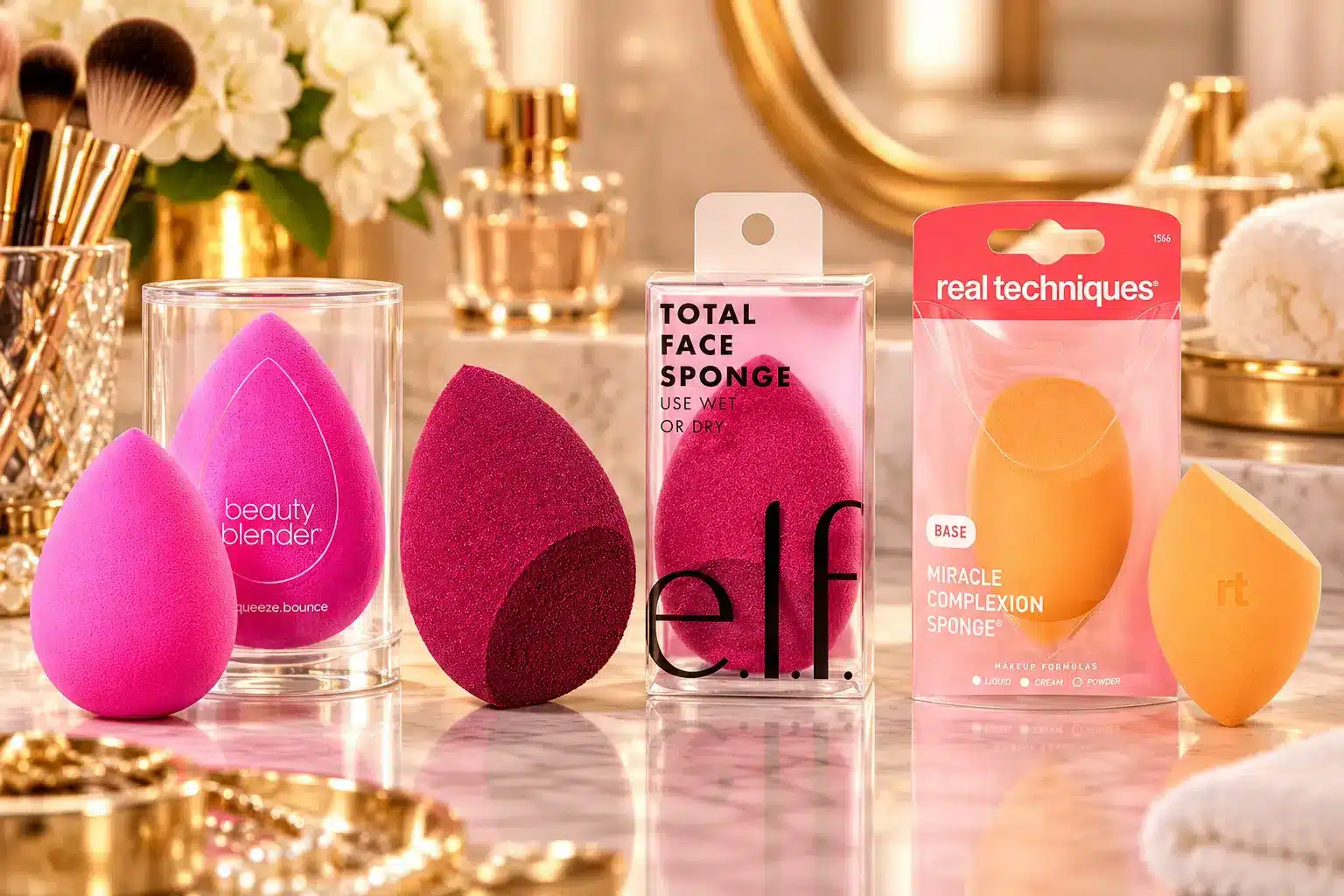
A makeup sponge looks simple until I try to make one tool handle foundation, concealer, cream color, touch-ups, and finishing work without turning the routine into a muddy sequence of product transfer. The best sponge is not only about softness or brand familiarity; it is about control, cleanliness, and having a clear job.
The nine selected products cover several tool philosophies. Beautyblender, Real Techniques, e.l.f., wet n wild, L’Oréal Paris, and KIKO Milano are single-sponge or single-blender options. Sigma Beauty adds a more specialized 3DHD identity. AOA Studio changes the equation with a sponge set, while COVERGIRL introduces sponge puffs rather than another conventional blender.
That variety is useful because I do not expect every face to need the same tool strategy. Someone who wears one skin tint and concealer may be happiest with a single sponge. Someone who layers several cream products may prefer a set so that foundation, cheek color, and clean backup tools stay separate.
I also separate product performance from technique. Even an excellent applicator can produce an uneven base when it is overloaded with foundation, dragged across the skin, or used while carrying residue from several previous steps.
My preferred approach is to start with less makeup, blend in sections, keep the pressure controlled, and refine boundaries before adding more coverage. If a sponge is compatible with damp use according to its maker and my product, I would adjust moisture deliberately rather than soak it automatically.
Reusable applicators also create a hygiene responsibility. I want a cleaning rhythm that is realistic, a place where the tool can dry completely, and a replacement habit that prevents a worn-out sponge from staying in the makeup bag simply because it still exists.
In this roundup, I keep the product claims conservative because most selected names do not expose detailed materials, dimensions, or proprietary construction. I would rather tell you exactly how I would evaluate each tool than invent technical features that are not stated.
The best makeup sponge for me is the one that disappears into the routine: it feels intuitive, keeps product placement controlled, cleans predictably, and does not require three extra tools to fix what it just moved.
Top 3 Makeup Sponges — My Expert Edit

Beautyblender
Original Pink Makeup Sponge
- Original Pink makeup sponge
- The reference-point option when I want one dedicated sponge to handle everyday complexion blending without turning the tool drawer into a collection.
- Best for a single all-purpose complexion sponge
- I would judge it by control, cleaning practicality, and whether it replaces rather than duplicates other complexion tools.

Sigma Beauty
3DHD Blender
- 3DHD Blender
- A more specialized blender identity when I want to compare a sculpted tool concept with conventional makeup sponges while keeping the exact geometry claims conservative.
- Best for a precision-minded complexion blending approach
- I would judge it by control, cleaning practicality, and whether it replaces rather than duplicates other complexion tools.

AOA Studio
Collection Makeup Mochi Sponge Set
- Collection Makeup Mochi Sponge Set
- A multi-sponge set when I want backups, rotation, or separate tools for different products instead of relying on one sponge for every application.
- Best for a set-based approach with room for tool rotation
- I would judge it by control, cleaning practicality, and whether it replaces rather than duplicates other complexion tools.
Beautyblender Original Pink Makeup Sponge is my Best Overall because the single-sponge role is clear and easy to build a repeatable routine around. Sigma Beauty 3DHD Blender is the more specialized tool identity for someone who wants to think deliberately about precision and hand position, while AOA Studio Collection Makeup Mochi Sponge Set is the strongest choice when rotation and clean backups matter more than committing to one applicator.
Makeup Sponges at a Glance
1. Original Pink Makeup Sponge
- Brand: Beautyblender
- Format: Original Pink makeup sponge
- Best use: a single all-purpose complexion sponge
- My tool focus: Application control, product separation, cleaning, drying, and whether the sponge simplifies the kit

2. Miracle Complexion Sponge
- Brand: Real Techniques
- Format: Miracle Complexion Sponge
- Best use: a streamlined complexion application routine
- My tool focus: Application control, product separation, cleaning, drying, and whether the sponge simplifies the kit

3. Total Face Blending Sponge
- Brand: e.l.f.
- Format: Total Face Blending Sponge
- Best use: a general face-blending role across compatible complexion products
- My tool focus: Application control, product separation, cleaning, drying, and whether the sponge simplifies the kit

4. Makeup Sponge
- Brand: wet n wild
- Format: Makeup Sponge
- Best use: a basic, uncomplicated sponge routine
- My tool focus: Application control, product separation, cleaning, drying, and whether the sponge simplifies the kit
5. 3DHD Blender
- Brand: Sigma Beauty
- Format: 3DHD Blender
- Best use: a precision-minded complexion blending approach
- My tool focus: Application control, product separation, cleaning, drying, and whether the sponge simplifies the kit

6. Infallible Blend Artist Makeup Blender
- Brand: L’Oréal Paris
- Format: Infallible Blend Artist Makeup Blender
- Best use: a single-tool blending approach for compatible base products
- My tool focus: Application control, product separation, cleaning, drying, and whether the sponge simplifies the kit
7. Collection Makeup Mochi Sponge Set
- Brand: AOA Studio
- Format: Collection Makeup Mochi Sponge Set
- Best use: a set-based approach with room for tool rotation
- My tool focus: Application control, product separation, cleaning, drying, and whether the sponge simplifies the kit

8. Makeup Masters Sponge Puffs
- Brand: COVERGIRL
- Format: Makeup Masters Sponge Puffs
- Best use: a puff-based makeup application role
- My tool focus: Application control, product separation, cleaning, drying, and whether the sponge simplifies the kit

9. Make Up Blender
- Brand: KIKO Milano
- Format: Make Up Blender
- Best use: a simple one-blender makeup routine
- My tool focus: Application control, product separation, cleaning, drying, and whether the sponge simplifies the kit
How I Choose a Makeup Sponge
Choose One Main Job
I decide whether the tool is for foundation, general complexion blending, powder-style pressing, or backup rotation before I compare brands. A sponge is easier to evaluate when its job is clear.
Start With Less Product
A sponge should help refine coverage, not encourage me to keep adding layers. I begin with a modest amount and build only where the face actually needs more.
Press More, Drag Less
For compatible complexion formulas, I prefer controlled pressing or bouncing motions over long swipes because dragging can disturb product already placed underneath.
Keep Clean Zones
If one tool touches several products, I try to use a clean section for each step or switch tools. Foundation residue should not automatically travel into every cream color I apply next.
Dry Completely Between Uses
A reusable sponge needs airflow after washing. I avoid sealing a damp applicator inside a closed makeup bag and follow the maker's care guidance.
Replace When the Tool Changes
I retire a reusable sponge when wear, damage, persistent odor, staining, or texture change makes continued use questionable. Replacement is part of the tool routine, not an afterthought.
Best Luxury Makeup Sponges Detailed Reviews
1. Original Pink Makeup Sponge
Beautyblender Original Pink Makeup Sponge is the clearest reference point in this lineup because the product name is simple and specific: one original pink makeup sponge. There is no multi-tool bundle or extra category to decode.
I like that simplicity when I am building a consistent base routine. The more familiar I become with one sponge, the easier it is to judge how much pressure I use, how much product the tool carries, and whether my tapping pattern is even from one side of the face to the other.
For liquid or cream complexion products that are compatible with sponge application, I generally prefer repeated pressing and bouncing motions over dragging. That is a technique choice rather than a claim about this specific sponge. The goal is to distribute product while disturbing the layer underneath as little as possible.
I would also decide whether I prefer using a sponge damp or dry according to the product directions and the makeup formula in front of me. Dampness can change how any absorbent applicator behaves, so I would not assume one method is automatically correct for every foundation, concealer, tint, or cream product.
A single sponge is easiest to evaluate when I keep the rest of the base routine stable. I would use the same foundation for several applications and notice whether the tool helps me keep coverage even around the center of the face, jaw, and edges near the hairline.
Cleaning matters just as much as application. A reusable complexion tool touches makeup, skin, and often moisture, so I would wash it according to the maker's care directions and let it dry thoroughly in a ventilated place. I would also replace it when wear, odor, staining, texture change, or damage makes continued use questionable.
What earns this the top position for me is not an unsupported promise of flawless results. It is the clarity of the role: one dedicated sponge, one familiar technique, and one repeatable way to blend complexion makeup.
Beautyblender
The benchmark single-sponge choice when I want one complexion tool to learn well
Original Pink Makeup Sponge
The reference-point option when I want one dedicated sponge to handle everyday complexion blending without turning the tool drawer into a collection.
How I Would Build a Repeatable Base Routine Around Beautyblender Original Pink
- Original Pink Makeup Sponge
- Beautyblender brand
- Single-sponge format
- Dedicated makeup application tool
- Simple complexion-blending role
- Easy to compare across repeated base applications
- Works within a minimal tool kit
- Care and replacement remain important for reusable use
Beautyblender Original Pink Pros & Cons + The Cleaning Rhythm I Would Maintain
Pros
- Clear single-tool role
- Easy to build a repeatable application technique around one sponge
- Does not require a multi-piece tool system
- Compact addition to a makeup bag
- Useful as a baseline for comparing other blender styles
Cons
- One sponge offers no built-in backup
- Exact shape, material, or firmness details are not stated in the selected name
- Reusable tools require regular cleaning and complete drying
- Not every complexion formula needs a sponge
- One tool can become inconvenient if it is still damp from cleaning
What I would evaluate through repeated use: I would watch how consistently I can reproduce my base with the same tapping pressure, how easy the sponge is to keep clean and dry between uses, and whether one sponge is enough for the number of complexion products I regularly apply.
My Final Sponge Verdict on Beautyblender Original Pink
This is my Best Overall choice when I want one dedicated makeup sponge to anchor the complexion routine without adding unnecessary tools.
2. Miracle Complexion Sponge
Real Techniques Miracle Complexion Sponge tells me exactly where I would place it in the routine: complexion. That makes it an easy option to understand when foundation, skin tint, concealer, or other compatible base products are the focus.
I would use it as a dedicated complexion tool rather than move it between every cream product in the makeup bag on the first day. Keeping its job narrow at the beginning helps me judge whether I prefer the finish and control of a sponge for the base.
One of the biggest mistakes I see with complexion sponges is adding too much product to the tool before the face has any structure. I prefer to start with a smaller amount on the skin or another appropriate surface, then use the sponge to distribute and refine coverage gradually.
The center of the face usually needs the most attention in my routine, while the perimeter often needs less. I would blend outward with decreasing product instead of loading the sponge equally for every section. That can help the base look less heavy near the hairline and jaw.
I would also use the sponge to soften boundaries after concealer or cream color when the formulas are compatible. The important point is to use whatever clean area of the tool is appropriate rather than repeatedly stamping residual foundation into every new product.
Because the selected product name does not expose shape details, I avoid claiming a specific edge or point. I focus on the supported role: it is a Miracle Complexion Sponge, and the practical question is whether its complexion-focused workflow fits how I prefer to apply base.
If I already own several brushes and only want one sponge for finishing and blending, this is the type of product that can fill that gap without expanding the tool kit dramatically.
Real Techniques
A complexion-specific sponge when I want the tool choice to stay centered on base makeup
Miracle Complexion Sponge
A complexion-focused sponge when the priority is blending base makeup with one reusable tool rather than switching among several applicators.
How I Would Use Real Techniques Miracle Complexion Sponge for a Gradual Base
- Miracle Complexion Sponge
- Real Techniques brand
- Complexion-focused product name
- Single sponge
- Useful for a dedicated base routine
- Can support gradual coverage-building techniques
- Compact tool-kit role
- Care routine matters for repeated use
Miracle Complexion Sponge Pros & Cons + Why I Would Keep Its Job Narrow at First
Pros
- Clear complexion focus
- Easy to dedicate to foundation and compatible base products
- Can complement an existing brush collection
- Single tool keeps the kit simple
- Good for gradual blending rather than adding many applicators
Cons
- Exact sponge geometry is not stated in the selected name
- No multi-sponge backup
- Needs regular cleaning
- May be unnecessary for someone who prefers brushes exclusively
- One sponge can carry residual product if sections are not kept reasonably clean
What I would evaluate through repeated use: I would compare it with my usual foundation brush or fingers, focusing on application speed, how evenly the base looks at the jaw and hairline, and whether the sponge earns a permanent complexion-only role.
My Final Sponge Verdict on Real Techniques Miracle Complexion Sponge
This is my Best Complexion Blend choice when I want a single sponge whose identity stays firmly centered on base makeup.
3. Total Face Blending Sponge
e.l.f. Total Face Blending Sponge is the broadest role statement in the main lineup. The phrase Total Face tells me I would evaluate it as a general face-blending tool rather than reserve it for one tiny section of the complexion.
That does not mean I would automatically use the same sponge surface for every product. A total-face tool still benefits from thoughtful sequencing. I would start with base, move to concealer if appropriate, and then decide whether cream cheek products belong in the same session or should use a clean side or a separate applicator.
I like the idea of one general sponge for someone who wants a compact tool bag. A brush roll can become bulky quickly, while one blending sponge can cover several compatible complexion steps if the formulas and application style suit it.
I would keep pressure light around areas where makeup tends to gather. The purpose is to blend product into a more even layer, not to press so hard that previously applied coverage is lifted away.
For touch-ups, I would be cautious about using a sponge that already contains old makeup. A clean tool matters more to me than convenience. If I expect to refresh makeup away from home, I would plan that step with a clean sponge or another appropriate applicator.
The selected name does not tell me material, exact dimensions, or a special surface. I would not invent those details. The supported appeal is straightforward: a Total Face Blending Sponge from e.l.f.
This is a sensible option when I want one sponge to earn multiple complexion jobs and I am disciplined enough to keep it clean between products and applications.
e.l.f.
A full-face blending option when I want one sponge to stay broad rather than specialized
Total Face Blending Sponge
A full-face blending sponge when I want one tool positioned around broad face application instead of a narrowly specialized task.
How I Would Divide a Total-Face Routine Across One e.l.f. Blending Sponge
- Total Face Blending Sponge
- e.l.f. brand
- Full-face blending positioning
- Single-sponge format
- General complexion-tool role
- Useful for a compact makeup kit
- Can be assigned several compatible blending steps
- Requires sensible cleaning between uses
e.l.f. Total Face Sponge Pros & Cons + How I Would Avoid Carrying Product From Step to Step
Pros
- Broad full-face role
- Can reduce the number of separate complexion tools
- Easy to understand for a simple makeup kit
- Works well with a step-by-step blending routine
- Compact for storage or travel
Cons
- Broad role can lead to product cross-contamination if cleaning is neglected
- Exact dimensions or material are not stated
- One sponge may not be ideal for every makeup texture
- No built-in backup tool
- Requires planning if used across several product categories
What I would evaluate through repeated use: I would notice whether one sponge truly replaces several tools without making the routine messier, whether it stays manageable across base and compatible cream steps, and whether cleaning frequency feels realistic.
My Final Sponge Verdict on e.l.f. Total Face Blending Sponge
This is my Best Full-Face Sponge choice when I want one broadly positioned blending tool and prefer a smaller tool kit.
4. Makeup Sponge
wet n wild Makeup Sponge has the most stripped-back product name in the group. There is no set language, specialized geometry, or category expansion in the title—just a makeup sponge.
That simplicity can be useful. I would evaluate it on the basics: whether it feels comfortable in my hand, whether I can distribute compatible complexion products evenly, whether it is easy to clean, and whether it fits the rest of my routine.
I do not need every makeup tool to promise a new technique. A straightforward sponge can be exactly what I want when I already understand how I like to apply foundation and simply need a dedicated applicator.
I would begin with a small amount of product and build only where I need more coverage. Sponges can make it tempting to keep adding product because the surface feels soft and forgiving, but a controlled base usually starts with less.
I would also monitor how the tool behaves around the nose, mouth, and under-eye area, not because the source claims a special shape, but because those are the places where any complexion applicator has to prove that I can control placement.
If I needed different application roles at the same time—one sponge for foundation and another for cream blush, for example—I would consider a set instead. This single product makes more sense when simplicity is the priority.
The best reason to choose a basic sponge is clarity. I know what I expect it to do, and I can decide quickly whether it earns a place in the routine.
wet n wild
A straightforward sponge when I want the tool to stay simple and uncomplicated
Makeup Sponge
The simplest option in the group when I want a straightforward makeup sponge without extra set pieces or a more specialized product concept.
How I Would Judge a Simple Makeup Sponge Without Overcomplicating the Routine
- Makeup Sponge
- wet n wild brand
- Single-tool format
- Simple application role
- Suitable for a minimal complexion kit
- Easy to evaluate against basic blending needs
- No unsupported specialty features assumed
- Reusable-tool care remains important
wet n wild Makeup Sponge Pros & Cons + The Basic Questions That Matter Most
Pros
- Very clear, simple role
- Minimal tool-kit footprint
- Easy to compare with existing sponges
- Works for someone who does not need a multi-piece set
- No unnecessary complexity in the product concept
Cons
- Product name exposes very few technical details
- Single sponge offers no backup
- May be too basic for someone seeking a specialized tool
- Needs cleaning and drying between uses
- Performance with specific formulas must be judged in the actual routine
What I would evaluate through repeated use: I would focus on basic consistency: how evenly I can blend my usual complexion product, whether control feels comfortable around smaller areas, and whether the tool remains easy to clean and store.
My Final Sponge Verdict on wet n wild Makeup Sponge
This is my Best Simple Sponge choice when I want a no-fuss applicator and prefer the tool itself to disappear into the routine.
5. 3DHD Blender
Sigma Beauty 3DHD Blender stands out because the name itself signals a more engineered identity than a generic makeup sponge. I would approach it as the precision-minded option in the group while staying conservative about exact geometry that is not described in the selected record.
The practical reason to choose a more sculpted blender concept is control. Complexion application is not one uniform movement across the entire face. The center, under-eye area, nose, jaw, and larger cheek planes all ask for different hand positions and different amounts of pressure.
I would use this tool slowly for the first few applications rather than immediately treating every surface as interchangeable. A specialized blender only becomes useful when I understand which part of the tool feels most natural for broad pressing and which area gives me better control around smaller zones.
I would also compare it with a simpler rounded sponge using the same foundation. The question is not whether a specialized design looks more advanced. The question is whether it changes my application enough to justify choosing it over a more basic tool.
For cream contour or other compatible complexion products, I would keep a clean section available rather than use the same loaded area that carried foundation. Precision disappears quickly when too many colors and textures accumulate on the same surface.
Sigma is a tool-focused beauty brand, but I do not need that reputation to make the decision. The product still has to make my own blending easier, more controlled, or more repeatable.
This is the option I would choose when I enjoy thinking about applicator geometry and want a blender that feels more deliberately specialized than the simplest sponges in the lineup.
Sigma Beauty
A specialized blender identity when I want more precision-minded tool design
3DHD Blender
A more specialized blender identity when I want to compare a sculpted tool concept with conventional makeup sponges while keeping the exact geometry claims conservative.
How I Would Learn Sigma 3DHD Blender Without Guessing What Every Surface Is For
- 3DHD Blender
- Sigma Beauty brand
- Specialized blender identity
- Precision-minded role
- Useful for comparing different hand positions across the face
- Single-tool format
- Good for someone who enjoys tool-specific technique
- Exact geometric details are not invented beyond the product name
Sigma 3DHD Blender Pros & Cons + The Practical Advantage I Would Demand From a Specialized Tool
Pros
- Distinct specialist identity
- Encourages deliberate placement technique
- Interesting alternative to a basic sponge
- Can suit users who care about application control
- Single tool remains compact
Cons
- Exact shape details are not specified here
- Specialized design only adds value if it improves the user's routine
- Requires learning how different areas of the tool feel
- One blender still needs regular cleaning
- May be unnecessary for someone satisfied with a basic sponge
What I would evaluate through repeated use: I would compare it side by side with a simpler sponge, looking at control around smaller facial areas, speed across larger areas, and whether the 3DHD concept produces a meaningful practical advantage for me.
My Final Sponge Verdict on Sigma Beauty 3DHD Blender
This is my Best Sculpted Blender choice when I want a more specialized tool identity and enjoy refining complexion technique through applicator design.
6. Infallible Blend Artist Makeup Blender
L’Oréal Paris Infallible Blend Artist Makeup Blender is another product whose name clearly centers the idea of blending. I would use it as a dedicated complexion applicator and judge it by how comfortably it fits into the products I already use.
The phrase Blend Artist is branding, not proof of a particular finish, so I would not turn the name into stronger performance claims. What matters is whether the blender helps me distribute base makeup evenly and whether the routine feels faster or more controlled than my current method.
I would avoid loading too much foundation into the sponge at once. My preference is to place a modest amount of product, blend outward, and then add more only where coverage is actually needed.
I also like to finish by lightly pressing along visible boundaries—the jaw, hairline, sides of the nose, and edges of concealer—using minimal additional product. That kind of final pass can reveal whether the applicator gives me enough control to refine rather than simply move makeup around.
For someone who prefers drugstore makeup tools or likes keeping complexion application within one familiar brand ecosystem, this may be a straightforward fit. I still make the choice by tool behavior, not brand loyalty alone.
Because the product name does not expose detailed material or shape information, I keep the assessment conservative. It is an Infallible Blend Artist Makeup Blender from L’Oréal Paris.
I would choose it when I want a single blending tool and do not need a multi-sponge set, puffs, or a more specialized 3D blender concept.
L’Oréal Paris
A dedicated makeup blender when I want a single tool to handle complexion application
Infallible Blend Artist Makeup Blender
A blender positioned around makeup blending when I want one dedicated complexion applicator rather than a brush-heavy base routine.
How I Would Use L’Oréal Blend Artist for a Controlled, Gradual Base
- Infallible Blend Artist Makeup Blender
- L’Oréal Paris brand
- Dedicated blending-tool identity
- Single blender
- Complexion application role
- Suitable for gradual coverage-building
- Useful in a compact makeup kit
- Technical details are kept conservative
L’Oréal Blend Artist Pros & Cons + What I Would Compare Against My Current Applicator
Pros
- Simple one-blender role
- Clear emphasis on makeup blending
- Easy to compare with other single sponges
- Compact tool footprint
- Can support a controlled base routine
Cons
- No backup sponge included
- Exact material and shape are not stated
- Branding does not guarantee a specific finish
- Requires regular cleaning and drying
- May not replace brushes for users who prefer brush application
What I would evaluate through repeated use: I would compare the blender with my existing method for speed, evenness at the facial edges, and the amount of product needed to reach the coverage level I prefer.
My Final Sponge Verdict on Infallible Blend Artist Makeup Blender
This is my Best Blend Artist choice when I want one dedicated complexion blender and prefer a straightforward single-tool routine.
7. Collection Makeup Mochi Sponge Set
AOA Studio Collection Makeup Mochi Sponge Set is the only main product whose name explicitly identifies a sponge set. That changes the buying logic because I am not evaluating only one applicator—I am evaluating the convenience of having several sponges available.
A set can make sense when I use different complexion products and want to separate them. One sponge can stay with foundation, another with cream blush or bronzer if appropriate, and another can remain clean as a backup.
Rotation can also help with cleaning. If one sponge has just been washed and needs time to dry fully, another clean sponge can keep the routine moving. That practical benefit matters more to me than simply owning more tools.
The word Mochi is part of the product name, but I would not translate it into an unsupported softness or material claim. I keep it as the product identity and evaluate the set concept on its own merits.
Multi-sponge sets can create clutter if every piece ends up doing the same job. I would assign roles deliberately or keep some unused until a replacement is needed. Opening every sponge at once is not automatically better.
I would also store clean and used sponges separately. A set only improves hygiene when the tools are allowed to dry properly and are not all mixed together while damp or covered in product.
This is the strongest choice for someone who values rotation, backups, or task separation more than the simplicity of one signature sponge.
AOA Studio
A multi-sponge set when rotation and backups matter more than committing to one applicator
Collection Makeup Mochi Sponge Set
A multi-sponge set when I want backups, rotation, or separate tools for different products instead of relying on one sponge for every application.
How I Would Assign Roles Inside the AOA Studio Mochi Sponge Set
- Collection Makeup Mochi Sponge Set
- AOA Studio brand
- Multi-sponge set
- Allows rotation between clean tools
- Can support task separation
- Useful for backup planning
- Set-based rather than single-sponge format
- Storage and drying organization matter
AOA Studio Sponge Set Pros & Cons + Why More Tools Only Help With Better Rotation
Pros
- Multiple sponges provide backups
- Can separate different complexion products
- Useful while another sponge is drying
- Good for frequent makeup users
- Set format can reduce emergency replacement pressure
Cons
- More tools require more cleaning organization
- Set can become clutter if every sponge has the same job
- Mochi wording does not establish a specific material claim here
- Storage needs increase with multiple sponges
- Opening all pieces at once may be unnecessary
What I would evaluate through repeated use: I would see whether multiple sponges genuinely improve rotation and task separation, whether I can keep clean and used tools organized, and whether the set prevents rushed reuse of a sponge that has not dried fully.
My Final Sponge Verdict on AOA Studio Collection Makeup Mochi Sponge Set
This is my Best Sponge Set choice when backups and tool rotation are more useful than having one signature blender.
8. Makeup Masters Sponge Puffs
COVERGIRL Makeup Masters Sponge Puffs are the main outlier in the group because they are sponge puffs rather than a conventional makeup blender. I would choose them when I prefer a puff-style application motion.
Puffs can encourage a different technique. Instead of sweeping, I think in terms of pressing or patting product onto the skin in controlled sections. That makes the tool category feel distinct even before I know any further construction details.
I would decide first which products in my routine actually make sense with a puff. The source does not specify a universal formula pairing, so I would follow the makeup product directions and use the puffs only where that application style is appropriate.
For powder touch-ups, a puff-like format can be convenient if the formula is designed for that use. For creams or liquids, I would not assume compatibility simply because another sponge works with them. Tool and formula need to make sense together.
I also like puffs as a separate category when I want to keep powder tools away from foundation sponges. Dedicated roles can make the kit cleaner conceptually and prevent every applicator from becoming coated with multiple formulas.
The Makeup Masters name does not change my evaluation. I would judge comfort, control, cleaning, and how naturally the puff works with the specific makeup I use.
This is the choice for someone who wants a different application motion and a distinct puff category rather than another conventional blending sponge.
COVERGIRL
A puff-format alternative when pressing and patting feel more natural than blending with a sponge
Makeup Masters Sponge Puffs
A puff-format option when I want a different application feel from a conventional blending sponge and prefer tools designed around patting or pressing motions.
How I Would Give COVERGIRL Sponge Puffs One Clear Job in the Makeup Bag
- Makeup Masters Sponge Puffs
- COVERGIRL brand
- Puff-format applicators
- Pressing and patting application concept
- Distinct from a conventional blender
- Useful for dedicated product roles
- Can keep puff tasks separate from foundation sponges
- Formula compatibility should be checked case by case
COVERGIRL Sponge Puffs Pros & Cons + When a Puff Is More Logical Than Another Blender
Pros
- Different application format from standard sponges
- Useful for dedicated pressing or patting techniques
- Can separate powder-type tasks from other complexion tools
- Straightforward tool category
- Good for users who prefer puff handling
Cons
- Not the same experience as a conventional makeup blender
- Exact construction details are not stated
- Formula compatibility needs to be considered
- May duplicate puffs already included with compact products
- Requires separate cleaning and storage
What I would evaluate through repeated use: I would decide which product in my routine benefits most from a puff, compare control against a brush or standard sponge, and see whether keeping the puff as a dedicated tool makes the makeup bag more organized.
My Final Sponge Verdict on Makeup Masters Sponge Puffs
This is my Best Sponge Puffs choice when I want a pressing-style applicator and prefer to keep that technique separate from conventional blending sponges.
9. Make Up Blender
KIKO Milano Make Up Blender closes the main list with another deliberately simple single-tool concept. The selected name tells me it is a makeup blender, and I keep the assessment focused on that role.
I would choose a single blender when my complexion routine is already stable and I do not need a full sponge set. One tool is easier to store, easier to replace intentionally, and easier to understand in terms of what it is supposed to do.
Application technique would stay conservative: use a modest amount of compatible product, press or blend in sections, and refine the visible edges before adding more coverage. The applicator should help me control makeup, not encourage me to keep layering it.
I would also keep the tool separate from dirty brushes or open product containers. A blender that is still damp after cleaning needs ventilation, not a closed pouch. Storage discipline matters for every reusable sponge-like tool.
Compared with the Beautyblender, Real Techniques, e.l.f., wet n wild, and L’Oréal single-tool options, the deciding factor would be personal feel and workflow rather than the brand name alone. Without additional supported technical details, I would not pretend there is a universal objective winner among similarly positioned tools.
I would pay attention to grip, reach, and how easily I can blend around smaller areas during actual use. Those are personal handling observations I would need to make rather than claims I can infer from the short product name.
This makes KIKO Milano a practical final option for someone who wants one dedicated makeup blender and prefers to keep the tool collection tightly edited.
KIKO Milano
A single KIKO blender when I want another compact one-tool complexion option
Make Up Blender
A dedicated makeup blender when I want another single-tool option for complexion application and prefer to keep the kit compact.
How I Would Compare KIKO Make Up Blender Against an Existing Sponge Without Changing the Rest of the Routine
- Make Up Blender
- KIKO Milano brand
- Single-tool format
- Dedicated makeup blending role
- Compact storage footprint
- Good for a stable complexion routine
- Easy to compare against other single sponges
- Care and drying remain important
KIKO Make Up Blender Pros & Cons + The Handling Questions I Would Decide in Real Use
Pros
- Simple one-tool concept
- Compact for storage
- Easy to integrate into an existing complexion routine
- No multi-piece clutter
- Useful for someone who wants a dedicated blender
Cons
- Technical construction details are not stated in the selected name
- No included backup
- Must be cleaned and dried properly
- May not offer a meaningful difference for someone already satisfied with another sponge
- Personal handling preference will matter
What I would evaluate through repeated use: I would compare the KIKO blender directly with the single sponge I already know, focusing on handling, control around smaller areas, cleaning, and whether it gives me a reason to switch.
My Final Sponge Verdict on KIKO Milano Make Up Blender
This is my Best Makeup Blender choice when I want a compact single-tool option and prefer an edited complexion kit.
Some Other Alternative Brands’ Products
The source catalog contains one additional same-category sponge option from BEAKEY. The other three products below are deliberately labeled as adjacent complexion-application alternatives rather than being misrepresented as standalone makeup sponges.

BEAKEY
Makeup Sponge 5 Pack
Best Sponge-Pack Alternative. The closest same-category alternative: a five-pack of makeup sponges for someone who wants rotation, backups, or separate tools for different base products.

IT Cosmetics
Heavenly Luxe Flat Top Buffing Foundation Brush #6
Best Brush Alternative. A flat-top buffing foundation brush rather than a sponge. I include it as a clearly labeled adjacent option for someone who prefers brush-based complexion blending.
PÜR
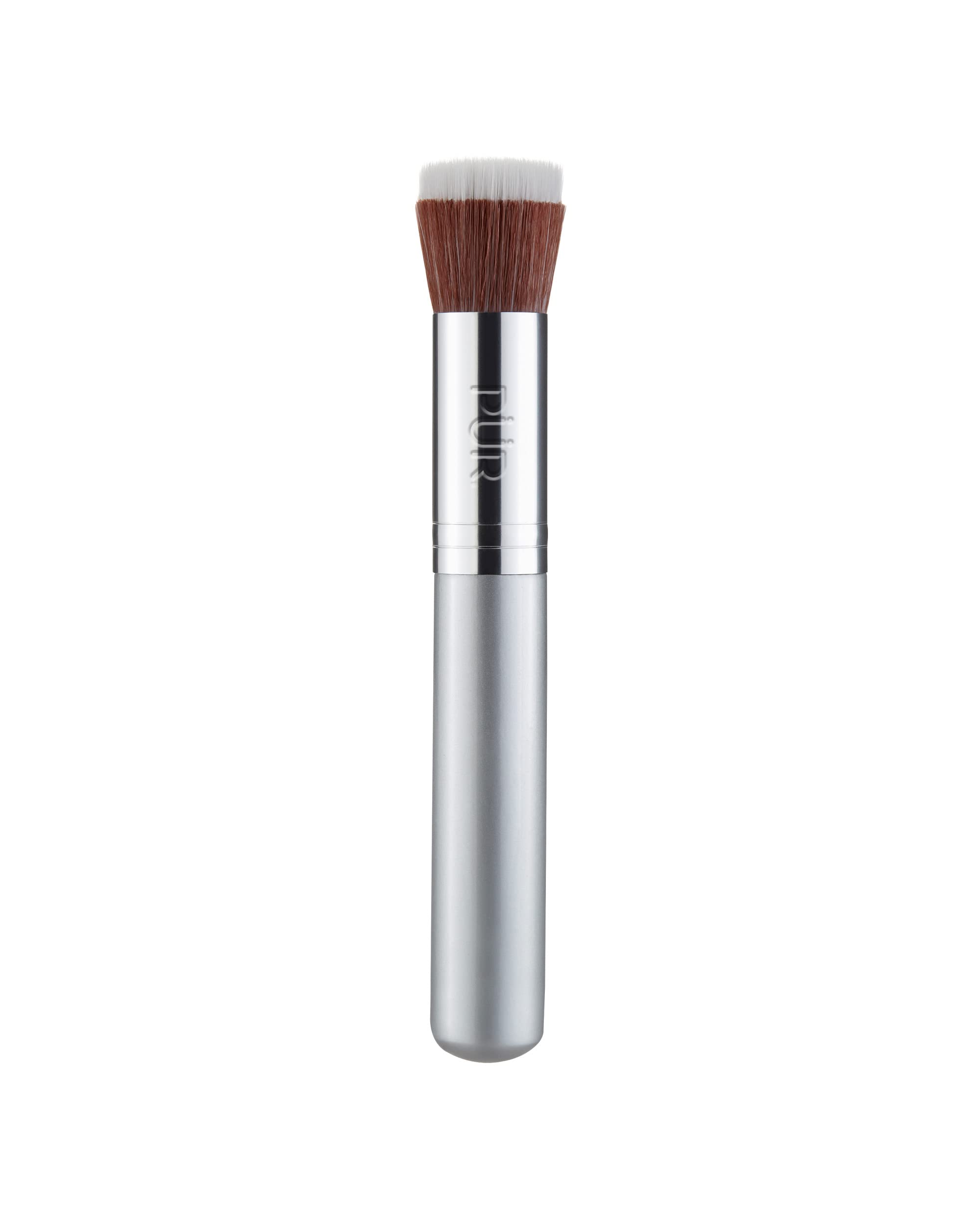
Liquid Chisel Makeup Brush – Makeup Brush
Best Liquid-Brush Alternative. A makeup brush positioned for liquid application, included for readers who want an adjacent complexion tool rather than another sponge.
Elizabeth Arden
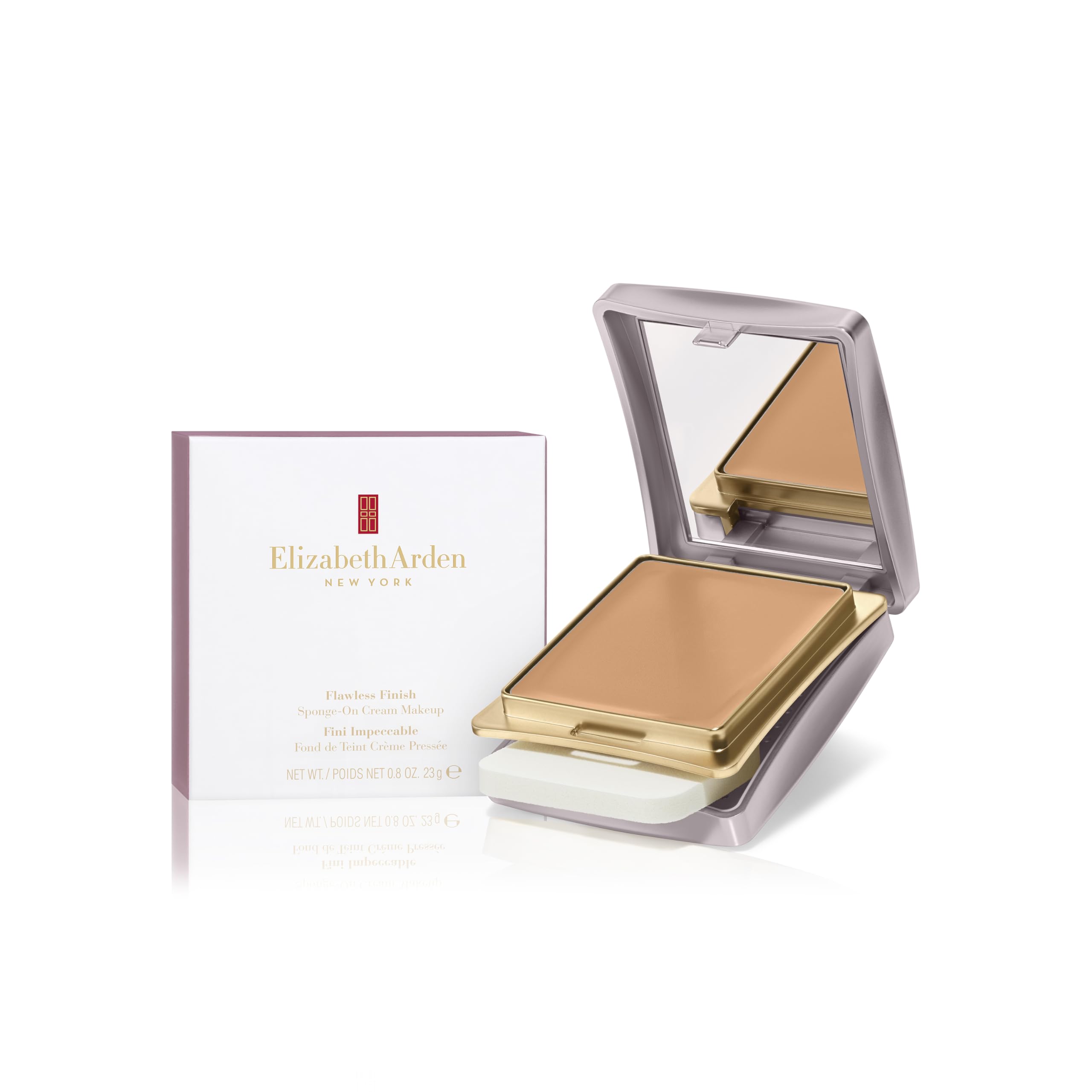
Flawless Finish Sponge-On Cream Foundation Makeup, Medium-to-Full Coverage, Includes Compact…
Best Compact-Applicator Alternative. A sponge-on cream foundation compact that includes an applicator. It is not a standalone sponge, so I treat it as an adjacent compact-plus-applicator alternative.
Final Comparison
| # | Product | Brand | Best For | Tool Role | Shop |
|---|---|---|---|---|---|
| 1 | Original Pink Makeup Sponge | Beautyblender | Best Overall | Original Pink makeup sponge | Amazon |
| 2 | Miracle Complexion Sponge | Real Techniques | Best Complexion Blend | Miracle Complexion Sponge | Amazon |
| 3 | Total Face Blending Sponge | e.l.f. | Best Full-Face Sponge | Total Face Blending Sponge | Amazon |
| 4 | Makeup Sponge | wet n wild | Best Simple Sponge | Makeup Sponge | Amazon |
| 5 | 3DHD Blender | Sigma Beauty | Best Sculpted Blender | 3DHD Blender | Amazon |
| 6 | Infallible Blend Artist Makeup Blender | L’Oréal Paris | Best Blend Artist | Infallible Blend Artist Makeup Blender | Amazon |
| 7 | Collection Makeup Mochi Sponge Set | AOA Studio | Best Sponge Set | Collection Makeup Mochi Sponge Set | Amazon |
| 8 | Makeup Masters Sponge Puffs | COVERGIRL | Best Sponge Puffs | Makeup Masters Sponge Puffs | Amazon |
| 9 | Make Up Blender | KIKO Milano | Best Makeup Blender | Make Up Blender | Amazon |
What I Would Evaluate Over 30 Days With a Makeup Sponge
A sponge can feel excellent during the first application and still fail as a long-term tool if cleaning is difficult, drying is slow, or the routine becomes inconsistent. I would evaluate the full ownership cycle, not just the first finish.
My Final Recommendation
Beautyblender Original Pink Makeup Sponge is my Best Overall because its role is the easiest to understand and build a consistent complexion routine around. Real Techniques Miracle Complexion Sponge is the complexion-centered alternative, e.l.f. Total Face Blending Sponge is the broad full-face option, and wet n wild Makeup Sponge is the deliberately simple choice.
Sigma Beauty 3DHD Blender is the specialist tool identity, L’Oréal Paris Infallible Blend Artist is another single-blender route, AOA Studio Collection Makeup Mochi Sponge Set is the best rotation-and-backup format, COVERGIRL Makeup Masters Sponge Puffs cover the puff category, and KIKO Milano Make Up Blender rounds out the list as another compact single-tool option.
Among the alternatives, BEAKEY Makeup Sponge 5 Pack is the closest same-category option. The IT Cosmetics and PÜR products are brush-based complexion alternatives, while the Elizabeth Arden product is a cream-foundation compact that includes an applicator rather than a standalone sponge. I keep those distinctions explicit so the comparison stays useful.
Frequently Asked Questions
How many makeup sponges do I need?
One can be enough for a simple foundation-and-concealer routine. Two or more become useful when I want backups, separate tools for strong cream colors, or a clean sponge available while another is drying.
Should I use a makeup sponge wet or dry?
I follow the sponge maker's care and use directions and consider the makeup formula. I do not assume one moisture level is automatically correct for every tool and every product.
What is the best way to apply foundation with a sponge?
For compatible formulas, I prefer small amounts of product and controlled pressing or bouncing motions in sections, then refine the jaw, hairline, and other edges before adding more coverage.
How often should I clean a reusable makeup sponge?
I keep cleaning frequent enough that old product does not accumulate and follow the maker's care guidance. The exact schedule depends on use, product type, and the tool itself.
When should I replace a makeup sponge?
I replace it when damage, persistent odor, concerning staining, texture change, or poor cleanability makes continued use questionable. Reusable tools still have a practical lifespan.
Is a sponge better than a foundation brush?
Not universally. A sponge and brush create different application experiences. I choose based on the formula, desired technique, and which tool gives me better control in my own routine.
Which product is best if I want several sponges?
AOA Studio Collection Makeup Mochi Sponge Set is the main selected set, while BEAKEY Makeup Sponge 5 Pack appears in the alternative section as another same-category multi-sponge option.
Are COVERGIRL Makeup Masters Sponge Puffs the same as a conventional blender?
No. I treat them as puff-format applicators with a different pressing or patting role rather than assuming they behave exactly like a standard makeup sponge.
Does Sigma Beauty 3DHD Blender have a special shape?
The product name clearly identifies it as a 3DHD Blender, but detailed geometry is not specified here. I therefore avoid inventing exact edges, planes, or dimensions.
Why are brush products included in the alternative section?
Only one additional same-category sponge brand appears beyond the nine main brands. The remaining alternatives are clearly labeled adjacent complexion-application tools so they are not mistaken for standalone sponges.
Read More Beauty Articles
More reads from our Makeup collection, selected for their related topics and keywords.

Best Luxury Blush Brushes
A blush brush looks simple until cheek color starts landing too low, too wide, too concentrated, or in a shape that does not match the…
Read More
Best Luxury Foundation Brushes
Foundation brushes look deceptively similar until I pay attention to the movement each shape encourages. A flat brush asks me to spread product directionally, a…
Read More
Best Luxury Makeup Sets Under $100
Hi, I’m Elena Hart . Beauty is my favorite kind of conversation—part artistry, part discovery, and always personal. Stay with me; I’ll help you look…
Read More
Best Luxury Makeup Gift Sets
Luxury makeup is easy to buy for yourself and surprisingly difficult to give well. The challenge is not finding a beautiful palette; it is choosing…
Read More
Best Luxury Makeup Sets for Beginners
The easiest beginner makeup bag is rarely the biggest one. Too many shades, brushes, finishes, and specialty steps can make a simple morning routine feel…
Read More
Best Luxury Skin Tints & Lightweight Alternatives
A good skin tint should make me look more even without making me feel as though I put on a full foundation and then tried…
Read More
Best Luxury Brow Products for Sparse Brows
Sparse brows are not one single problem. Some brows have a strong front and a missing tail; others have uneven density through the center; some…
Read More
Best Luxury Brow Pencils
A brow pencil can change the balance of the face with only a few marks, which is why I prefer restraint. The best luxury brow…
Read More