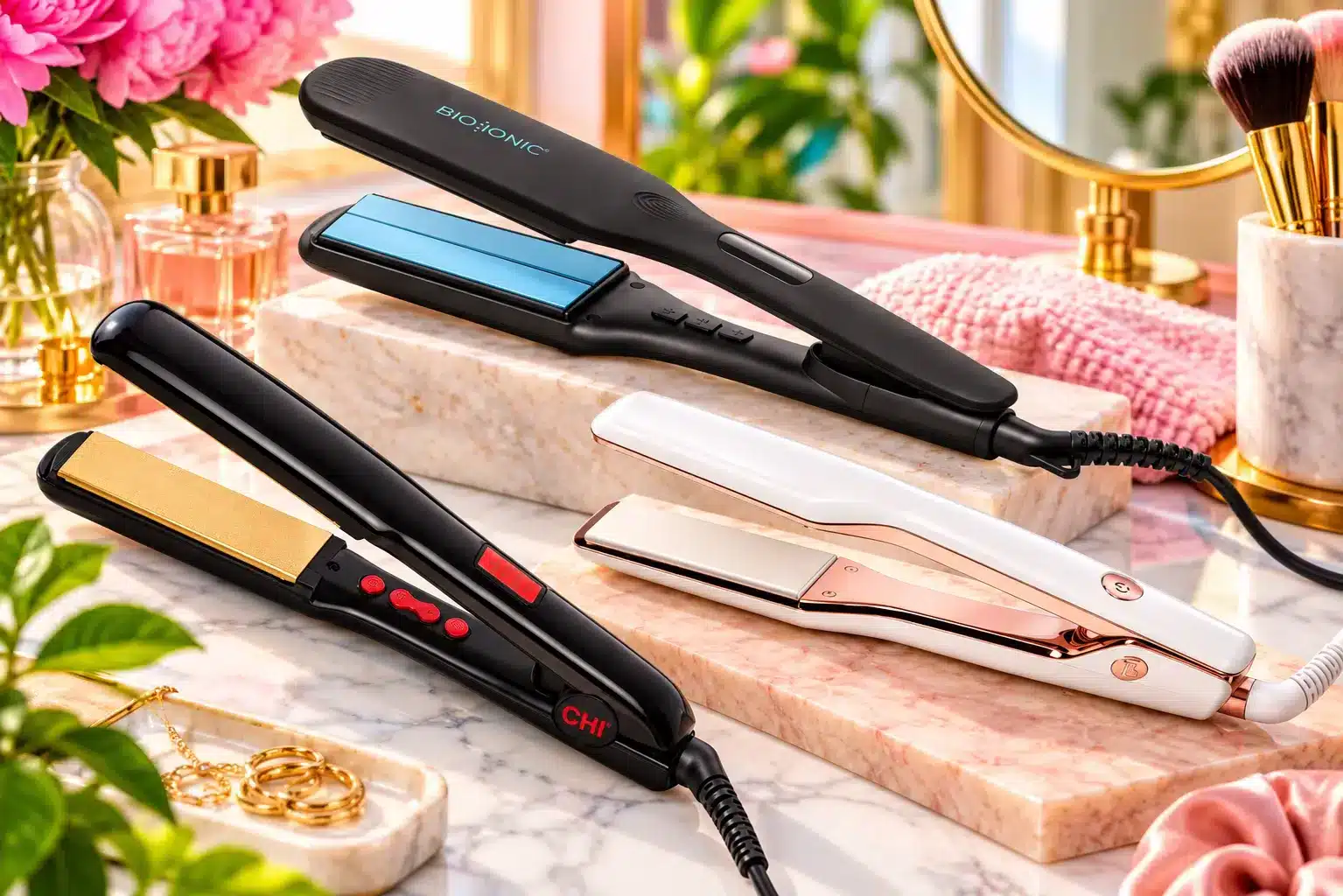
Straightening a thick head of hair can become a job of managing the hair you are not working on yet. A top section falls into the lower layers, a large bundle feels smooth on the outside but still has a wave underneath, and the ends have already been styled while the roots need another look. The temptation is to buy the hottest iron available and hope it makes the routine shorter. I would begin elsewhere: plate coverage, the thickness of each working section and whether the tool gives you enough control to finish without repeatedly retracing your work.
The best flat irons for thick hair should suit the way that thickness shows up on your head. You may have a high number of relatively fine strands, fewer coarse strands or a combination of dense roots and lightened, more delicate ends. Those differences matter more than the size of your ponytail alone. A wide plate can make sense for long, substantial lengths, but it cannot make an overfilled section behave like a thin, neatly separated ribbon. Nor does a thick head of hair automatically need the maximum temperature printed on the handle.
My starting preference is a wider adjustable iron for people who mostly wear their hair straight and have enough length to use the larger surface comfortably. A slightly narrower model can be the better purchase for layered cuts, face-framing pieces and a finish with a little curve through the ends. I also want the controls to feel understandable. Some people like choosing a digital temperature; others would rather return to a small set of familiar settings. The useful choice is the one that lets you repeat a sensible routine without guessing what you changed last time.
There is also a difference between removing unwanted puffiness and pressing every section as flat as possible. Thick hair can look beautifully polished while keeping a substantial outline, movement at the shoulder and softness around the face. I would decide on that finish before comparing tools. If a smooth blow-dry already gets you most of the way there, your iron may only need to refine a few areas. If you want a straighter overall shape, sectioning and preparation become a larger part of the appointment you are making with your own mirror.
The choices below cover wide ceramic plates, a more versatile intermediate width, a silicone-strip design and a slim titanium option. Each has a clear reason to be here and a limitation that could matter in daily use. The six coaching cards before the reviews help connect those differences to familiar styling situations, followed by a practical guide for choosing a tool that fits your length, hair condition and patience.
My buying priority: choose the plate width you can position accurately, then look at heat control. Extra coverage is useful only when the whole section sits evenly between the plates. I would rather make clean progress through smaller, organized sections than compensate for a crowded plate with extra pressure.
Three Starting Flat Irons for Different Thick-Hair Routines

T3 SinglePass X 1.5-inch
- 1.5-inch custom-blend ceramic plates
- Five adjustable heat settings from 260°F to 410°F
- One-hour automatic shut-off

CHI G2 1.25-inch
- 1.25-inch titanium-infused ceramic floating plates
- Color-coded digital temperature control up to 425°F
- Dual voltage for compatible international electrical systems

BaBylissPRO Nano Titanium Ultra-Thin 1.5-inch
- 1.5-inch titanium plates with an extended five-inch length
- Slim, lightweight design
- Numbered adjustable heat control up to 450°F
A thick-hair routine should have a clear stopping point. Before you begin, decide whether you want a straight silhouette, a smoother version of your natural shape or polished lengths with a soft turn at the ends. That decision keeps a tool's versatility in perspective: a broad iron can be an excellent straightening choice even when a narrower one would be easier for a fringe or a pronounced wave.
I would also judge value across the entire session. An iron that looks fast on the first section may feel awkward when you reach the back of your head. A readable control, comfortable reach and manageable working width can matter more than an impressive maximum temperature. The short ranking below reflects those everyday decisions rather than treating every thick-haired reader as the same buyer.
Flat Irons for Thick Hair at a Glance
T3 SinglePass X 1.5-inch
- 1.5-inch custom-blend ceramic plates
- Five adjustable heat settings from 260°F to 410°F
- One-hour automatic shut-off
CHI G2 1.25-inch
- 1.25-inch titanium-infused ceramic floating plates
- Color-coded digital temperature control up to 425°F
- Dual voltage for compatible international electrical systems
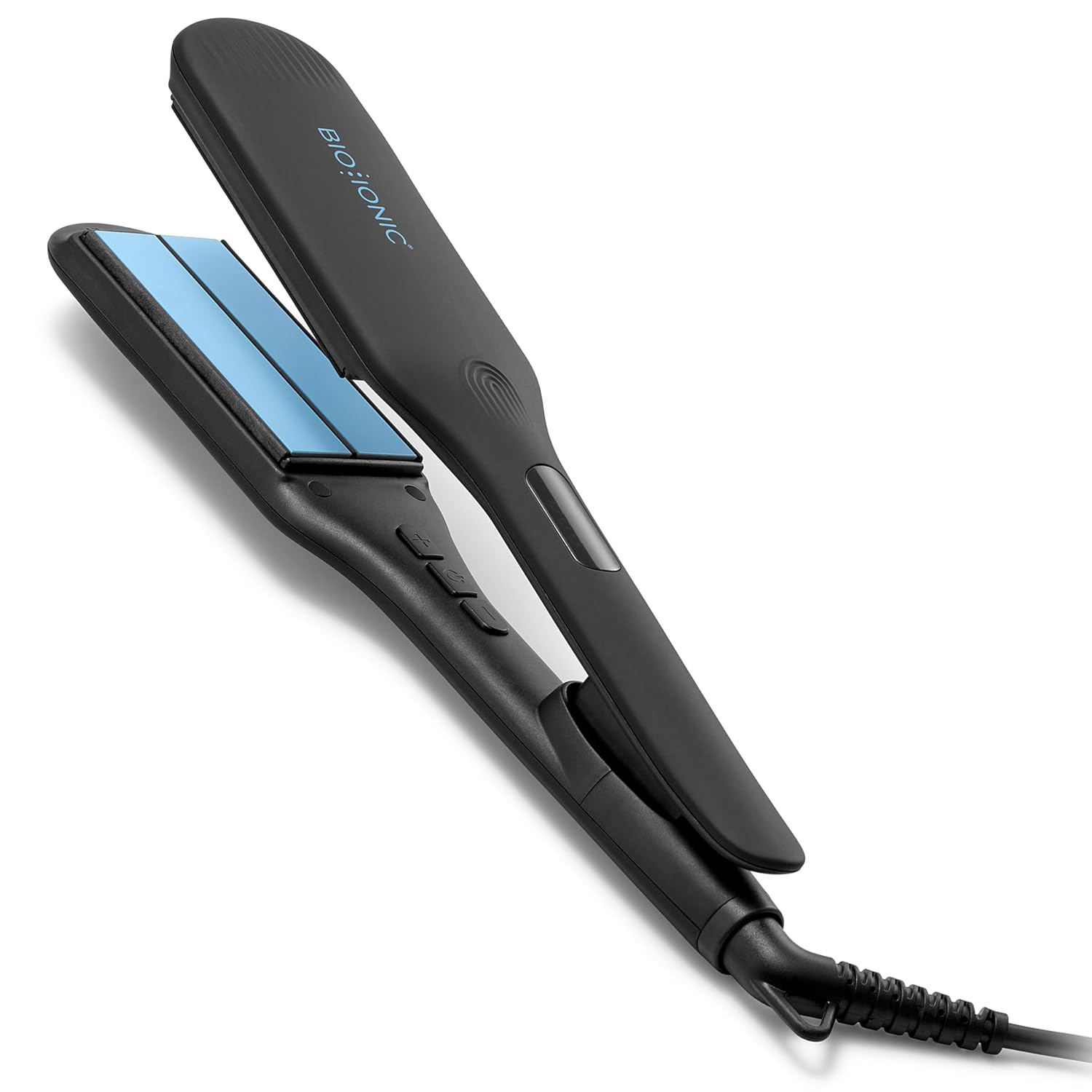
Bio Ionic OnePass 1.5-inch
- 1.5-inch styling surface
- Silicone speed strips and ceramic plates
- Digital temperature control up to 450°F; one-hour automatic shut-off
BaBylissPRO Nano Titanium Ultra-Thin 1.5-inch
- 1.5-inch titanium plates with an extended five-inch length
- Slim, lightweight design
- Numbered adjustable heat control up to 450°F
Quick Ranking by Thick-Hair Styling Priority
| Styling Priority | Product | Format | Price |
|---|---|---|---|
| Wide Ceramic Pick | T3 SinglePass X 1.5-inch | 1.5-inch ceramic plates | Price on Amazon |
| Layered Hair Pick | CHI G2 1.25-inch | 1.25-inch titanium-infused ceramic | Price on Amazon |
| Guided Glide Pick | Bio Ionic OnePass 1.5-inch | 1.5-inch ceramic with silicone strips | Price on Amazon |
| Slim Titanium Pick | BaBylissPRO Nano Titanium Ultra-Thin 1.5-inch | 1.5-inch extended titanium plates | Price on Amazon |
How I Match Flat Irons to Thick Hair
Use these six situations to narrow the choice before reading the reviews. Match the tool to the part of the routine that actually needs help, then keep section size and hair condition in the decision.
How To Cover Long Lengths
If most of your styling happens from below the ears to the ends, consider a 1.5-inch iron. Lay each section flat across the plates rather than collecting a thick rope of hair. The T3 SinglePass X and Bio Ionic OnePass offer that wider format. Leave room to guide the section cleanly; width should help you organize the work, not encourage you to squeeze in more hair than the plates can contact evenly.
How To Handle Shorter Layers
A dense cut with short layers may need access more than extra width. The CHI G2 in the 1.25-inch size is an intermediate option when you want to smooth the main lengths and turn the ends without handling a very broad plate. Keep the iron clear of the scalp and ears. For very short sections, choosing an even narrower tool can make more sense than forcing a wide iron into a tight space.
How To Choose Heat
Begin with your hair's condition, including lightening, previous chemical treatments and fragile ends. Density describes how much hair you have; it does not tell you how much heat each strand should receive. Use the manufacturer's guidance and start conservatively on a discreet dry section. If the result is uneven, check section thickness and preparation before increasing the setting. A maximum temperature is a limit, not a required starting point.
How To Prepare Dense Roots
Separate the lower layers before switching on the iron, and make sure the roots are completely dry. Dense hair can hide damp areas even when the surface feels ready. Clip the upper sections out of the way, detangle gently and work through one accessible layer at a time. Apply a suitable heat protectant as directed and let any required drying time finish before the plates touch your hair.
How To Keep Soft Ends
Plan to change your wrist angle only near the ends when you want a slight inward curve. Do not repeatedly fold the same piece between the plates while searching for a stronger bend. A narrower or intermediate width can be easier for this detail. If your ends already sit well after drying, leave them alone and concentrate on the areas that interrupt the overall shape.
How To Stop Reworking
Allow a completed section to cool before deciding whether it needs another pass. Check the hair underneath as well as the visible surface, then move on when the finish matches your goal. Keep finished hair apart from unstyled sections with clips or a clear parting. If you lose track of what is done, the answer is better organization rather than automatically running the iron through everything again.
Best Flat Irons for Thick Hair: Detailed Reviews
1. T3 SinglePass X 1.5-inch
For long, thick hair that you mainly wear straight, the T3 SinglePass X is the first format I would consider. Its 1.5-inch plates provide a broader working surface than a standard one-inch iron, while the control system offers five heat settings rather than a long menu of temperatures. That combination makes sense when you want a straightforward routine built around smoothing substantial lengths. The appeal is coverage with a manageable set of choices, especially if you prefer returning to a familiar setting once you have found a sensible starting point for your hair.
I would use that width deliberately. A long section should spread into a flat ribbon, with enough room to keep its edges inside the styling surface. Taking a bulky section because the iron looks large defeats the purpose: some strands sit close to the plates while others are buried in the middle. On a dense head of hair, clean separation at the back can be more valuable than moving quickly through the easy front pieces. This is the kind of tool I would pair with reliable sectioning clips and a routine that gives the lower layers proper attention.
The tradeoff is visible around short face-framing pieces and intricate shapes. A broad plate does not become a precision iron simply because its finish looks polished on long hair. If your daily styling includes a short fringe, tightly curved ends or frequent flat-iron curls, I would compare the CHI before committing to the larger surface. For someone whose priority is an even, straight outline with a restrained bend at the bottom, that limitation may barely matter. It depends on the haircut you actually maintain, rather than the longest piece of hair on your head.
The SinglePass name should not set an unrealistic target for every section. Your preparation, texture and desired finish still determine the work. I like this choice for a buyer who wants fewer control decisions and a wide ceramic format, while remaining willing to adjust section size instead of chasing speed. I would pass if the main problem is access to short layers, or if you strongly prefer reading a chosen temperature numerically. The best reason to choose it is that its width matches most of your routine.
T3
Wide Ceramic Pick
T3 SinglePass X 1.5-inch
A broad ceramic option for a straight-focused routine.
Price on AmazonSinglePass X Plate and Heat Details
- 1.5-inch custom-blend ceramic plates
- Five adjustable heat settings from 260°F to 410°F
- One-hour automatic shut-off
Where the Wide T3 Fits Your Routine
Pros
- Broad surface suits straightening longer lengths
- Small setting selection simplifies repeat use
- Adjustable heat leaves room to account for hair condition
Cons
- Wide format is less convenient for very short sections
- Preset selection offers fewer increments than some digital irons
I would make the first section at the back small enough to inspect easily, then use the same section thickness through that layer. If the back remains harder to manage than the front, I would reorganize the partings before changing the heat. Consistency of preparation is what makes a familiar setting useful.
My T3 Choice for Long Dense Lengths
Choose the SinglePass X when a wide ceramic plate and uncomplicated heat choices match your straightening routine. It is most persuasive for longer hair with substantial lengths to smooth. A layered cut that needs careful shaping close to the face may justify a smaller working width instead.
2. CHI G2 1.25-inch
Not every thick haircut benefits from the broadest plate you can buy. If your hair has shorter layers above longer lengths, the CHI G2 in the 1.25-inch size offers a useful middle ground. I would look at it for someone who wants one iron to smooth a substantial head of hair and still feel approachable when turning the ends. The titanium-infused ceramic plates and digital control give it a different emphasis from a wide iron with a handful of presets: the buying decision is about access and repeatable adjustment as much as coverage.
That intermediate width is particularly relevant when the finished shape matters around the shoulders. Thick hair can create a strong edge at the bottom, and pressing everything straight down may make that edge feel heavier than intended. I would use a modest turn through the last part of a section when the haircut calls for it, keeping the rest of the stroke steady. The goal is a deliberate outline, with each layer settling into the next. There is no need to turn every piece into a curl just because the iron can help shape a bend.
For very long hair worn uniformly straight, the narrower working surface is a compromise. You may prefer a 1.5-inch option if most of your time is spent covering uninterrupted lengths. I would not promise that the CHI makes every routine shorter. Its value is more specific: it leaves you less plate to position when you move from the back to the front, while providing more width than the smallest detail-oriented irons. That can be a sensible balance for an everyday cut with several different section lengths.
The color-coded display should help you recognize your chosen range, but it cannot judge hair condition for you. I would still start with the tool's guidance and treat older, processed ends differently from resilient new growth. If you want a practical general-purpose iron and know you will use its shaping flexibility, the G2 has a strong case. If your entire brief is maximum coverage on long, straight lengths, I would compare the wider models first. Width is the deciding feature here; the highest available heat is secondary.
CHI
Layered Hair Pick
CHI G2 1.25-inch
An intermediate width for smoothing and shaping a layered cut.
Price on AmazonCHI G2 Size and Digital Controls
- 1.25-inch titanium-infused ceramic floating plates
- Color-coded digital temperature control up to 425°F
- Dual voltage for compatible international electrical systems
The G2 Balance of Coverage and Access
Pros
- Intermediate width helps with varied layer lengths
- Digital control supports a repeatable chosen setting
- Format suits straight styling with a restrained end bend
Cons
- Less broad coverage than the 1.5-inch options
- Color-coded ranges still require your judgment about hair condition
For a layered cut, I would style the lower outline first and check how the upper layers fall over it. That makes it easier to see where a small curve is useful and where another pass would only flatten hair that already sits well. I would reserve extra attention for a few uneven pieces rather than polishing every layer to the same degree.
When I Would Choose the 1.25-inch CHI
The G2 is my intermediate-width choice for thick hair with layers, shaped ends or changing styling preferences. It asks you to accept less plate coverage in exchange for a size that can feel easier to place around a varied haircut. That is a worthwhile trade when precision occupies a meaningful part of your routine.
3. Bio Ionic OnePass 1.5-inch
The Bio Ionic OnePass stands apart because of its silicone speed strips. Rather than choosing it simply because it has a high temperature ceiling, I would consider whether you like the idea of a plate design intended to guide the section as you move through it. In the 1.5-inch version, that feature sits alongside a wide surface for smoothing longer hair. It is a relevant option for someone whose main frustration is maintaining an orderly glide through dense lengths, provided they still separate those lengths into manageable sections before starting.
I would keep hand pressure light enough for the tool to move smoothly. More grip does not mean you should squeeze harder, slow to a crawl or pull through a tangle. If the iron catches, stop and check the section rather than trying to overcome resistance with force. Dense hair can conceal crossed strands at the back of the head, and an orderly section matters regardless of the plate design. The OnePass is appealing when you are willing to keep that preparation consistent; it cannot take over the work of detangling or separating damp hair from dry hair.
Its wide format makes the most sense when straightening is the main event. Long layers and substantial lengths offer room to position the plates comfortably, while short pieces near the face call for more care. I would not make this my first choice for a buyer who mostly wants tight flat-iron curls or delicate fringe work. A broad styling surface can produce a smooth overall shape, but that is a different priority from intricate shaping. Thinking about the finished haircut helps prevent a feature-rich tool from becoming an awkward daily compromise.
There is also a maintenance detail worth considering before purchase. The silicone strips are a distinctive component, so I would pay attention to their condition rather than treating the plates as completely featureless surfaces. Keep the iron clean according to its instructions and investigate a change in glide instead of repeatedly pressing through it. For someone who wants a wider adjustable iron and is specifically interested in this guided-contact design, the OnePass is a focused choice. For someone already comfortable with a conventional ceramic glide, the T3 may be the simpler preference.
Bio Ionic
Guided Glide Pick
Bio Ionic OnePass 1.5-inch
A wide styling surface with silicone speed strips.
Price on AmazonOnePass Width and Silicone Strip Design
- 1.5-inch styling surface
- Silicone speed strips and ceramic plates
- Digital temperature control up to 450°F; one-hour automatic shut-off
Working with the Bio Ionic Plate Feel
Pros
- Wide format suits long straightening sections
- Distinctive strip design offers an alternative plate feel
- Adjustable control permits a consistent chosen setting
Cons
- Silicone strips add a component to inspect and maintain
- Broad plates are less suited to small shaping details
I would test how a small, fully detangled section moves before settling into the routine. A smooth stroke should not require a forceful grip. If I noticed more resistance later, I would check for product buildup, tangled strands or worn strips before assuming that a hotter setting would solve the problem.
My Verdict on the Wide OnePass
The OnePass is worth considering when long, thick lengths and guided glide are your two priorities. Buy it for the combination of width and silicone-strip design, with realistic expectations about sectioning. A smooth result still depends on preparation and controlled movement rather than a promise hidden in the product name.
4. BaBylissPRO Nano Titanium Ultra-Thin 1.5-inch
The BaBylissPRO Nano Titanium Ultra-Thin is a compelling format for someone who wants substantial plate coverage without a bulky-looking handle. The 1.5-inch width and extended five-inch plates put the emphasis firmly on straightening coverage, while the slim design is the feature I would weigh when considering a longer styling session. Thick hair can demand sustained attention at the back and sides; a tool that suits the way you hold and reposition it can be easier to live with than one chosen solely for a temperature specification.
I would approach this iron as a straightening specialist within a broader routine. Prepare the hair, separate a clear working layer and lay the section along the plates without crowding the ends. Extended plates give you useful space, but they also reward careful alignment. Hair should remain on the styling surface rather than slipping over an edge while you reach around your head. If your working section becomes difficult to keep flat, reducing its size is a more sensible response than closing the plates harder or dragging the iron at a different angle.
The numbered heat control is an important preference question. This model offers many positions, but a numbered position is a different experience from reading an exact selected temperature on a digital screen. I would keep track of the setting that works with a conservative trial section and avoid treating the top of the range as the goal. Buyers who like clear numerical temperature feedback may find the CHI or Bio Ionic more intuitive. That is a practical limitation even when the plate dimensions otherwise seem ideal for long, substantial hair.
My reason to shortlist this BaBylissPRO would be its broad titanium styling surface and slim shape together. I would be less enthusiastic for a person who needs to work around very short layers, wants detailed temperature feedback or plans to alternate constantly between straight hair and small curls. The iron has a clear role when the bulk of the task is smoothing lengths. It deserves consideration on that basis, with the understanding that plate material does not remove the need for measured heat, dry hair and a routine that stops once the desired finish is there.
BaBylissPRO
Slim Titanium Pick
BaBylissPRO Nano Titanium Ultra-Thin 1.5-inch
Extended titanium plates in a slim straightening tool.
Price on AmazonUltra-Thin Plate Dimensions and Heat Control
- 1.5-inch titanium plates with an extended five-inch length
- Slim, lightweight design
- Numbered adjustable heat control up to 450°F
Using the Slim BaBylissPRO Shape
Pros
- Long styling surface gives room to arrange a section
- Slim design suits buyers who dislike bulky tools
- Strong straightening focus for substantial lengths
Cons
- Numbered control does not show an exact selected temperature
- Large styling surface is less convenient for short detail work
I would practice the reach to the back of my head with the iron switched off first, making sure the cord and my sectioning clips do not interfere. During styling, I would keep the tool moving and focus on even alignment. If my arm position made a section hard to guide, I would change the parting rather than contorting my wrist around it.
Who the Extended Titanium Format Suits
Choose the Ultra-Thin when extended titanium plates and a slim tool shape are the features you will use most. Its main compromise is the control style, followed by the familiar limits of a wide plate around short sections. For a straight-focused routine on long, thick hair, those may be acceptable tradeoffs.
Four Alternative Flat-Iron Brands

ghd Gold 1-inch
Consider the ghd Gold if you prefer a narrower ceramic iron and a fixed-temperature routine. Its preset 365°F styling temperature removes the task of choosing among settings. That simplicity is also its main limitation: you cannot select a lower or higher temperature. I would consider it for thick hair with shorter layers when you already know that fixed setting suits your routine. Choose an adjustable iron if hair condition makes a range of choices more useful, and a wider format if long straight lengths occupy most of your styling time.
Price on Amazon
Dyson Corrale
The Dyson Corrale offers a different reason to shop: cordless flexibility and flexing plates. I would consider it if working around a cord is a recurring inconvenience, rather than assuming that a cordless tool must be the quickest choice for a dense head of hair. A long straightening session requires attention to charging and available runtime. It is a distinctive alternative for someone who values freedom of movement, but the purchase should make sense for your normal session length and preferred tool weight.
Price on Amazon
Kristin Ess 3-in-One Titanium 1.25-inch
Kristin Ess offers a 1.25-inch titanium alternative for people who switch between a straight outline and waves. The rounded shape gives this iron a styling emphasis beyond covering long lengths. I would compare it with the CHI when you want an intermediate width and expect to use that versatility regularly. Its four preset temperature choices offer a different control experience from a more granular digital adjustment. Prepare completely dry hair before styling, and choose your setting around condition rather than the thick-hair label alone.
Price on Amazon
Hot Tools Black Gold Ionic 1.25-inch
The Hot Tools Black Gold Ionic is another intermediate-width option, with rounded edges and a broad selection of digital heat levels. It is relevant if you want a readable control and plan to change the shape of your style as well as smooth it. I would compare the handle and setting interface with the CHI before choosing between them. A large number of levels does not require frequent adjustment during a session; the benefit is finding a sensible setting that you can return to consistently.
Price on AmazonFinal Flat Iron Comparison
| Product | Best For | Heat Controls | Plate Format | Consideration | Price |
|---|---|---|---|---|---|
| T3 SinglePass X 1.5-inch | Wide Ceramic Pick | 5 presets, 260–410°F | 1.5-inch ceramic plates | Wide format is less convenient for very short sections | Price on Amazon |
| CHI G2 1.25-inch | Layered Hair Pick | Digital adjustment, up to 425°F | 1.25-inch titanium-infused ceramic | Less broad coverage than the 1.5-inch options | Price on Amazon |
| Bio Ionic OnePass 1.5-inch | Guided Glide Pick | Digital adjustment, up to 450°F | 1.5-inch ceramic with silicone strips | Silicone strips add a component to inspect and maintain | Price on Amazon |
| BaBylissPRO Nano Titanium Ultra-Thin 1.5-inch | Slim Titanium Pick | Numbered adjustment, up to 450°F | 1.5-inch extended titanium plates | Numbered control does not show an exact selected temperature | Price on Amazon |
A Practical Thick-Hair Straightening Routine
Start the routine before the iron heats up. Decide on the parting and the overall finish, place clips within reach and separate the hair into workable areas. Detangle gently with a method appropriate to your texture. Apply heat protectant according to its directions, then finish drying the hair completely. Pay particular attention to dense roots and the nape, where dampness can remain hidden under a dry surface. These flat irons are for dry styling.
Once the hair is ready, choose a conservative setting using the manufacturer's instructions and your hair condition. Try a discreet, manageable section rather than testing a large visible front piece. Keep it thin enough that the hair lies flat between the plates. Close the tool with controlled pressure and move steadily through the section without pausing on one spot. If you need to reposition your hand or the comb, release the section first instead of holding it in the heat.
Work through a clear layer and keep finished pieces apart from the rest. The aim is to know where you are in the routine without relying on memory while loose hair falls over your shoulders. If the outer strands look straight but the interior still looks uneven, check how much hair you took and whether it was fully prepared. Smaller sections can resolve that mismatch without automatically increasing the temperature. Let the completed hair cool before judging its final shape.
For the face-framing pieces, slow the organization of the work rather than the movement of the hot plates. Make the section easy to see, keep the iron away from skin and guide only the part that needs attention. If a fringe or short layer is awkward with the chosen width, use a tool suited to that detail instead of forcing a broad plate closer to your face. Long-hair coverage and small-area access are separate tasks.
Finish by checking the silhouette from several angles, including the lower layers at the back. Leave areas that already match the goal alone. If you want a little movement, use a restrained turn at the ends on the pieces that need it rather than restyling the entire head. Follow with finishing products as directed, allowing the hair to cool first where appropriate. A complete style does not require every strand to look identical.
Switch the iron off, unplug it and let it cool on an appropriate heat-resistant surface. Automatic shut-off is a backup feature rather than the final step of the routine. Once the tool is fully cool, inspect and clean it as its instructions allow. If the glide changes, investigate buildup or component wear before the next session. Keeping the tool ready for its next use is part of making a thick-hair routine feel manageable.
Final Recommendation
For long, thick hair worn mainly straight, I would start with the T3 SinglePass X and its wide ceramic format. Choose the CHI G2 1.25-inch when a layered cut and shaped ends make access more important. The Bio Ionic OnePass deserves a closer look if you specifically want silicone speed strips on a broad plate, while the BaBylissPRO Ultra-Thin is the alternative for extended titanium coverage in a slim design.
The deciding question is where your current routine becomes difficult. Long lengths suggest coverage; varied layers suggest a more versatile width; confusing controls suggest a clearer interface. Choose around that recurring task, then give sectioning and hair condition the same attention as the tool. A polished finish should have a clear endpoint you can recognize without repeatedly pressing through hair that is already styled.
Frequently Asked Questions
What plate width is best for thick hair?
A 1.5-inch plate can be useful for longer hair when most of the routine involves straightening substantial lengths. A 1.25-inch or narrower model may be easier around layers, short sections and shaped ends. Choose around the areas you style most often, keeping each section thin enough to lie evenly between the plates.
Does thick hair need the highest heat setting?
No. Density, individual strand thickness and hair condition are different considerations. Dense hair can still have fragile or processed ends. Start conservatively using the tool's instructions, and check dryness, detangling and section size before increasing heat because a result looks uneven.
Should I choose ceramic or titanium plates?
Compare the whole iron rather than choosing on material alone. Width, controls, handling and the way the plate design suits your routine all matter. Both materials require sensible heat and steady movement; neither removes the need to prepare fully dry, well-separated sections.
Is a two-inch iron better than a 1.5-inch iron?
It can offer more coverage on long lengths, but it also needs more room to position accurately. A very wide plate may feel awkward on a layered cut or near short face-framing pieces. More surface is useful when your haircut lets you use it comfortably.
Can I straighten damp thick hair with these irons?
Use these conventional flat irons on completely dry hair. Dense roots and lower layers can stay damp after the surface feels dry, so check them before styling. Follow the exact product instructions and allow applied preparation products to dry as directed before using the plates.
Why is my hair smooth outside but uneven underneath?
An overfilled section can leave its interior less evenly arranged against the plates. Separate a thinner, flatter section and check that it is detangled and fully dry. Also keep finished hair separate so you can assess the lower layers without repeatedly styling the outer surface.
Can a wide flat iron create waves?
Some wide irons can help shape bends, but a smaller or intermediate width may be easier for detailed waves and varied layer lengths. If waves occupy a large part of your routine, weigh that task alongside straightening coverage when choosing the tool.
Do I need to straighten every section more than once?
There is no required pass count for every head of hair. Let a completed section cool, assess it and stop when it matches the intended finish. If several areas need repeated work, review preparation and section size instead of automatically repeating the same approach.
Which choice suits thick layered hair?
The CHI G2 1.25-inch is the intermediate-width choice here for a mix of lengths and a gentle turn at the ends. Very short layers may still be easier with a narrower iron. Your shortest regular styling task helps determine the most practical width.
How can I keep some movement after straightening?
Decide where you want softness before you begin. Leave sections that already sit well alone, avoid repeatedly flattening the crown and use a small turn at the ends only where it helps the haircut. A smoother outline does not require every piece to be pressed uniformly flat.
How should I clean a flat iron?
Switch it off, unplug it and let it cool completely before cleaning. Follow its specific instructions for wiping the plates and inspecting any additional components. Do not immerse the tool. If residue or a damaged part changes the glide, address it before continuing to use the iron.
What should I prioritize when upgrading an old iron?
Name the recurring problem first: awkward width, unclear controls, difficult handling or a deteriorating styling surface. Choose an upgrade that addresses that problem in your normal haircut and routine. Paying for a higher maximum temperature alone may not resolve the part of styling that takes the most effort.
Read More Beauty Articles
More reads from our Tools collection, selected for their related topics and keywords.

Best Flat Irons for Fine Hair
Fine hair can look smoother after straightening and still feel less like the style you wanted. The flyaways are gone, but so is the movement…
Read More
Best Hair Styling Tools for Salon-Worthy Results
A smooth blowout, a sharply defined curl, and a glossy straight finish begin with different movements. That is why buying the best hair styling tools…
Read More
Best Rechargeable Beauty Tools for Travel
A travel beauty kit becomes complicated surprisingly quickly. One tool needs a magnetic cable, another uses USB-C, and a third works beautifully only when its…
Read More
Best Travel Beauty Tools for a Carry-On
The carry-on is zipped, the liquids bag is full, and there is still a question on the bathroom counter: which beauty tool actually deserves to…
Read More
Best Face Rollers for a Cooling Skincare Routine
A chilled roller is one of the few beauty tools that can make an early morning feel immediately more comfortable, yet not every roller delivers…
Read More
Facial Cleansing Brushes for Gentle Cleansing
A cleansing brush can be the most pleasant part of a nighttime skincare routine—or the one extra step that leaves your cheeks unexpectedly tight. The…
Read More
Best Microcurrent Devices for the Face
The most important part of a microcurrent device is the routine that comes with it. Before thinking about a more sculpted-looking jawline or a firmer…
Read More
Best Travel Makeup Brush Sets
The brush that gets left behind is often the one that makes a travel makeup bag feel incomplete. A powder brush is easy to remember;…
Read More